Introduction
Planning a pregnancy is an important step in a woman’s life. Whether you are preparing for your first pregnancy, hoping to conceive after a previous pregnancy, or planning a family in the future, understanding your reproductive health can help you make informed decisions.
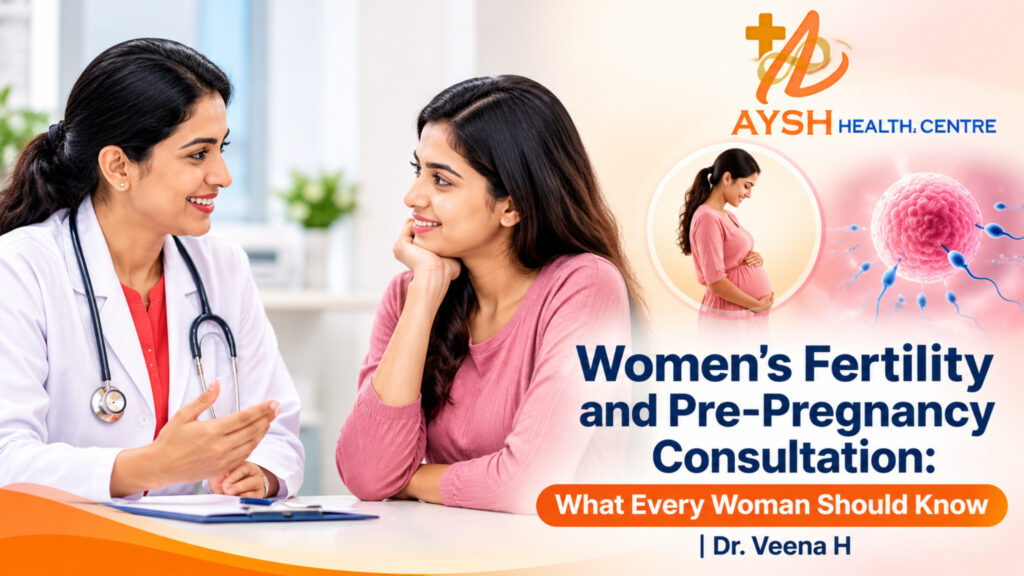
A pre-pregnancy consultation, also known as a preconception consultation, gives you an opportunity to discuss your health, menstrual cycle, fertility, medical history and pregnancy goals with a gynaecologist before trying to conceive. It can help identify health conditions that may need attention, review medicines and supplements, and provide guidance on nutrition, lifestyle and recommended investigations.
Fertility is influenced by several factors, including age, ovulation, ovarian reserve, fallopian tube health, uterine health and sperm quality. Having irregular periods or a gynaecological condition does not automatically mean you cannot become pregnant. However, understanding these factors before conception can help you know when medical support may be useful.
At Aysh Healthcare, Dr. Veena H’s women’s health and pregnancy-related resources cover topics such as PCOS, menstrual health, fertility and pregnancy care. This guide explains what women should know about fertility consultation, pre-pregnancy checkups, fertility assessments and preparing for a healthy pregnancy.
What Is a Pre-Pregnancy Consultation?
A pre-pregnancy consultation is a medical appointment with a gynaecologist before you start trying to conceive. Its purpose is to assess your current health and identify factors that may affect conception or pregnancy.
During the consultation, the doctor may review your menstrual history, previous pregnancies, existing medical conditions, medications, family history and lifestyle habits. The discussion is personalised because every woman’s reproductive health and pregnancy plans are different.
A pre-pregnancy consultation may help you:
-
Understand your menstrual cycle and ovulation pattern.
-
Discuss your chances of natural conception.
-
Identify medical conditions that may need management before pregnancy.
-
Review prescription medicines and supplements.
-
Understand which tests may be appropriate.
-
Receive guidance about folic acid and nutrition.
-
Discuss lifestyle changes that support reproductive health.
-
Plan the right time to seek fertility support if needed.
A consultation does not mean that you necessarily need fertility treatment. For many women, it is simply an opportunity to prepare for pregnancy with appropriate medical guidance.
Why Is a Fertility Consultation Important?
A fertility consultation helps identify possible factors that may influence your ability to conceive. It is particularly useful if you have irregular periods, known reproductive health conditions, previous pregnancy complications or concerns about age-related fertility changes.
1. Understand Your Ovulation Pattern
Ovulation is the process in which an ovary releases an egg. Conception generally requires an egg to be released and fertilised by sperm.
Women with regular menstrual cycles often have more predictable ovulation patterns, although regular periods do not guarantee that every fertility factor is normal.
Conditions such as Polycystic Ovary Syndrome (PCOS) can cause irregular or absent ovulation. A gynaecologist can review your cycle history and recommend an appropriate assessment if ovulation is a concern.
2. Identify Reproductive Health Conditions
Certain gynaecological conditions may affect conception or pregnancy in some women. These include:
-
PCOS and ovulation-related problems
-
Endometriosis
-
Uterine fibroids
-
Uterine polyps
-
Certain pelvic infections or previous pelvic surgeries
-
Thyroid disorders and other hormonal conditions
Not every woman with these conditions will experience fertility problems. Their significance depends on the nature and severity of the condition.
3. Review Age-Related Fertility Factors
Female fertility generally declines with age, particularly as women move through their late 30s and into their 40s. Changes in egg quantity and quality can influence the time it takes to conceive and the likelihood of pregnancy.
A consultation can help women understand their individual circumstances and decide whether an earlier fertility evaluation is appropriate.
4. Review Existing Medical Conditions
Conditions such as diabetes, high blood pressure, thyroid disorders and certain autoimmune conditions may require attention before pregnancy.
Managing these conditions before conception can help reduce avoidable risks and support better pregnancy planning.
5. Review Medicines and Supplements
Some prescription medicines, over-the-counter products and supplements may need to be reviewed before pregnancy. Do not stop prescribed medication on your own. Discuss your current medicines with your doctor so that any necessary changes can be planned safely.
What Happens During a Pre-Pregnancy Checkup?
A pre-pregnancy checkup usually begins with a detailed discussion about your health and pregnancy goals. The investigations recommended will depend on your age, symptoms, medical history and previous pregnancy experiences.
1. Menstrual and Reproductive History
Your gynaecologist may ask about:
-
Age when your periods first started
-
Usual menstrual cycle length
-
Whether your periods are regular or irregular
-
Duration and heaviness of menstrual bleeding
-
Menstrual pain or pelvic discomfort
-
Previous pregnancies and pregnancy outcomes
-
Previous fertility treatment, if any
-
History of PCOS, fibroids or endometriosis
Keeping track of your menstrual dates can make this discussion more useful.
2. Medical and Family History
The doctor may review existing health conditions, previous surgeries, allergies, family history and any medicines you take regularly.
This information helps identify conditions that may require additional monitoring or treatment before pregnancy.
3. Physical Assessment
Depending on your medical history and symptoms, the doctor may recommend a general health assessment. This may include checking blood pressure, weight and other relevant clinical measurements.
A pelvic examination is not automatically required for every preconception appointment. It may be recommended when symptoms or medical history indicate a need.
4. Discussion About Pregnancy Goals
Your doctor may discuss when you plan to conceive, how long you have been trying and whether you have any concerns about fertility.
If you are not planning pregnancy immediately, the consultation can still help you understand your reproductive health and future options.
What Fertility Tests May Be Recommended?
There is no single test that can determine whether a woman will become pregnant naturally. Fertility assessment involves different investigations depending on the suspected cause and the couple’s reproductive history.
1. Hormone Blood Tests
Certain blood tests may help evaluate reproductive and general health. Depending on the clinical situation, these may include:
-
Thyroid-stimulating hormone (TSH) to assess thyroid function
-
Prolactin when symptoms suggest a possible prolactin-related problem
-
Androgen levels when PCOS or androgen excess is suspected
-
Other reproductive hormone tests when clinically appropriate
The timing of some hormone tests may depend on the menstrual cycle.
2. Ovarian Reserve Assessment
Ovarian reserve refers broadly to the remaining egg supply in the ovaries. Depending on the patient’s circumstances, assessment may involve:
-
Anti-Müllerian hormone (AMH) testing
-
Antral follicle count through ultrasound
-
Certain hormone tests, such as follicle-stimulating hormone (FSH), when indicated
Ovarian reserve tests have limitations. They can help predict how the ovaries may respond to fertility treatment, but they cannot reliably confirm whether a woman can or cannot conceive naturally.
3. Pelvic Ultrasound
A pelvic ultrasound helps assess the uterus and ovaries. It may identify fibroids, ovarian cysts, features associated with PCOS and certain structural concerns.
The need for an ultrasound depends on the patient’s symptoms, examination and fertility history.
4. Ovulation Assessment
If irregular ovulation is suspected, the doctor may recommend cycle tracking, blood tests or ultrasound monitoring.
This can help determine whether ovulation is occurring and whether further evaluation is needed.
5. Fallopian Tube Assessment
The fallopian tubes provide the pathway through which the egg and sperm meet. If there is a reason to suspect tubal blockage or damage, a doctor may recommend a test such as a hysterosalpingogram (HSG).
This investigation is not necessary for every woman and is generally considered as part of a fertility evaluation.
6. Semen Analysis
Fertility involves both partners. A semen analysis assesses aspects of sperm health, including sperm count, movement and shape.
Evaluating the male partner when appropriate can help identify possible contributing factors and avoid unnecessary delays in fertility care.
How Does Age Affect Female Fertility?
Age is an important factor in fertility because both egg quantity and egg quality change over time.
Fertility in the 20s
Many women in their 20s have relatively favourable fertility potential. However, reproductive health conditions, ovulation problems and male-factor issues can affect conception at any age.
Fertility in the Early 30s
Many women conceive naturally in their early 30s. However, fertility gradually changes with age, making it useful to understand your reproductive health and seek advice if you have concerns.
Fertility After 35
After 35, fertility generally declines more noticeably. Egg quantity and quality decrease, and the risk of miscarriage and certain pregnancy-related complications increases.
Women aged 35 or older are generally advised to consider a fertility evaluation after six months of regular, unprotected intercourse without conception.
Fertility After 40
Women over 40 may benefit from seeking medical advice sooner rather than waiting for several months. A doctor can discuss age-related fertility factors and whether timely specialist evaluation is appropriate.
For more information, read Trying to Conceive After 35: Important Fertility Factors Women Should Know.
How Do PCOS and Irregular Periods Affect Fertility?
PCOS is a common hormonal condition that can affect ovulation. Some women with PCOS release eggs regularly, while others experience irregular or absent ovulation.
When ovulation is unpredictable, it may become harder to identify the fertile window. This can make conception take longer for some women.
A gynaecologist may assess:
-
Menstrual cycle regularity
-
Signs of androgen excess
-
Ovulation patterns
-
Relevant hormone levels
-
Metabolic health
-
Other possible fertility factors
Not every woman with PCOS needs fertility treatment. Many women with PCOS conceive naturally, while others may benefit from treatment to support ovulation.
Explore PCOS and pregnancy: Can you conceive naturally? for further information.
Irregular periods can also occur due to thyroid disorders, changes in body weight, stress and other health conditions. Therefore, it is important not to assume that every irregular cycle is caused by PCOS.
What Should You Do Before Trying to Conceive?
Preparing for pregnancy involves more than tracking ovulation. A few practical steps can support your general health and help you approach conception with greater confidence.
1. Start Folic Acid Before Pregnancy
Folic acid is important for the early development of the baby’s brain and spinal cord. Women planning pregnancy are generally advised to take 400 micrograms of folic acid daily, starting at least one month before conception and continuing through early pregnancy, unless their doctor recommends a different dose.
Some women may require a higher dose because of specific medical or pregnancy-related risk factors. The correct dosage should be discussed with a healthcare professional.
2. Follow a Balanced Diet
A varied and balanced diet supports general health before and during pregnancy.
Include:
-
Fresh vegetables and fruits
-
Whole grains
-
Protein sources such as lentils, beans, eggs and suitable dairy products
-
Foods containing iron and calcium
-
Healthy fat sources
-
Adequate water throughout the day
Avoid relying on restrictive diets or unverified fertility supplements.
3. Maintain a Healthy Weight
Being significantly underweight or overweight can affect menstrual cycles and ovulation in some women. If weight management is recommended, aim for gradual, sustainable changes rather than crash diets.
4. Stay Physically Active
Regular moderate physical activity supports cardiovascular and metabolic health. Walking, swimming, cycling and other suitable activities can be included according to your fitness level and medical advice.
5. Avoid Smoking and Alcohol
Smoking can negatively affect reproductive health and pregnancy outcomes. Avoiding smoking and alcohol when planning pregnancy is an important precaution.
6. Get Adequate Sleep
A consistent sleep routine supports overall well-being. Aim for sufficient rest and discuss persistent sleep difficulties with a healthcare professional if they affect your daily life.
7. Review Vaccinations and Medical Conditions
Before pregnancy, your doctor may review vaccination status, immunity to certain infections and existing medical conditions. Some vaccines need to be given before conception, with an appropriate interval before trying to become pregnant.
When Should You Seek Fertility Support?
The right time to seek fertility evaluation depends on age, menstrual regularity and medical history.
General guidance includes:
-
Under 35 years: Consider an evaluation after 12 months of regular, unprotected intercourse without conception.
-
35 to 39 years: Consider an evaluation after six months without conception.
-
Over 40 years: Seek medical advice promptly rather than waiting for a prolonged period.
You may need an earlier consultation at any age if you have absent or highly irregular periods, known PCOS, endometriosis, previous pelvic infections, a history of certain reproductive surgeries or other known fertility concerns.
A fertility consultation does not automatically mean you will need advanced treatment. It helps identify whether a problem exists and what steps may be appropriate.
Why Should Both Partners Attend a Fertility Consultation?
Difficulty conceiving can involve female factors, male factors, a combination of both or causes that remain unexplained after evaluation.
Female fertility assessment may examine ovulation, ovarian reserve, fallopian tubes and uterine health. Male fertility assessment may include semen analysis and a review of medical history.
Evaluating both partners when appropriate helps provide a more complete understanding of the situation. It can also prevent unnecessary delays or investigations focused on only one partner.
What Fertility Treatment Options May Be Considered?
Treatment depends on the underlying cause, age, reproductive history and pregnancy goals. Not every couple needs fertility medication or assisted reproductive treatment.
1. Lifestyle and Medical Condition Management
If an underlying condition such as thyroid dysfunction, diabetes or PCOS is affecting reproductive health, managing that condition may be an important first step.
Lifestyle support may also be recommended as part of an individualised plan.
2. Ovulation-Induction Medication
Women who do not ovulate regularly may be considered for medication that helps stimulate ovulation. The choice of medicine and monitoring schedule depend on the diagnosis and medical history.
These medicines should only be used under medical supervision.
3. Treatment of Specific Gynaecological Conditions
Fibroids, polyps, endometriosis and other reproductive conditions may require specific management when they are contributing to fertility difficulties.
Treatment is not always necessary, and the decision depends on the location, severity and effect of the condition.
4. Specialist Fertility Treatment
If initial management is unsuccessful or additional fertility factors are identified, a referral to a fertility specialist may be appropriate. Depending on the circumstances, options may include intrauterine insemination (IUI) or in vitro fertilisation (IVF).
The need for these treatments should be determined through a complete fertility assessment rather than assumed at the beginning.
What Is the Difference Between a Fertility Consultation and a Pregnancy Consultation?
Although the two appointments are related, they focus on different stages of the reproductive journey.
| Fertility Consultation | Pre-Pregnancy Consultation |
|---|---|
| Focuses on understanding factors affecting conception | Focuses on preparing for pregnancy |
| Reviews ovulation and reproductive history | Reviews overall health and pregnancy readiness |
| May include fertility investigations | May include preconception screening |
| Can assess both partners | Reviews the woman’s health and partner-related considerations where relevant |
| May lead to fertility treatment if needed | May lead to advice on nutrition, supplements and medical optimisation |
A woman may benefit from both types of consultation depending on her circumstances. A pre-pregnancy appointment can also identify when a more detailed fertility assessment is needed.
How Can Dr. Veena H Help With Fertility and Pregnancy Planning?
Choosing a gynaecologist for fertility and pre-pregnancy guidance is an important part of planning a family. An appropriate consultation gives you the opportunity to discuss menstrual health, medical conditions, pregnancy goals and any concerns about conception.
Dr. Veena H is featured on Aysh Healthcare’s website in connection with women’s health, PCOS, menstrual concerns and pregnancy care. Her published profile highlights more than 22 years of experience in gynaecology.
A consultation can help you discuss:
-
Menstrual cycle irregularities
-
PCOS and ovulation-related concerns
-
Fertility questions and pregnancy planning
-
Age-related fertility factors
-
Medical conditions that may need attention before pregnancy
-
Recommended preconception investigations
-
Nutrition, folic acid and lifestyle guidance
You can also explore Aysh Healthcare’s pregnancy care and antenatal checkup information.
Frequently Asked Questions About Women’s Fertility and Pre-Pregnancy Consultation
1. What is the right time to have a pre-pregnancy consultation?
Ideally, schedule a consultation before you start trying to conceive. This gives you time to review your health, medicines, vaccinations and any medical conditions that may need attention before pregnancy.
2. Is a pre-pregnancy checkup necessary if I am healthy?
It can still be useful. Even women who feel healthy may benefit from reviewing their medical history, medications, vaccination status and pregnancy-related health needs.
3. Which tests are done during a fertility consultation?
Depending on your circumstances, tests may include hormone blood tests, pelvic ultrasound, ovulation assessment, ovarian reserve evaluation, fallopian tube testing and semen analysis for the male partner. Not every person needs all these tests.
4. Can I get pregnant naturally with PCOS?
Yes. Many women with PCOS conceive naturally. Some experience irregular ovulation and may need medical support. The right approach depends on individual reproductive and metabolic health.
5. Do irregular periods mean infertility?
No. Irregular periods do not automatically mean infertility. However, they may indicate irregular ovulation or another health condition that needs assessment, particularly when you are planning pregnancy.
6. Does age affect female fertility?
Yes. Fertility generally declines with age because egg quantity and quality decrease over time. Women aged 35 or older may benefit from seeking fertility advice sooner if pregnancy does not occur.
7. Should my partner also undergo fertility testing?
When a couple is experiencing difficulty conceiving, evaluating both partners is generally important. A semen analysis may be recommended to assess male reproductive factors.
8. Should I take folic acid before trying to conceive?
Women planning pregnancy are generally advised to take 400 micrograms of folic acid daily, starting at least one month before conception. Your doctor may recommend a different dose if you have specific risk factors.
9. How long should I try to conceive before consulting a doctor?
Women under 35 are generally advised to seek an evaluation after 12 months of trying. Women aged 35 or older are generally advised to seek an evaluation after six months. Women with known fertility concerns or irregular or absent periods may need an earlier consultation.
10. Does a fertility consultation mean I need IVF?
No. A fertility consultation is an assessment, not a commitment to treatment. Many women conceive naturally, and others may benefit from simpler medical management. IVF is considered only when appropriate after evaluating the individual or couple.
Conclusion
A woman’s fertility is influenced by several factors, including age, ovulation, ovarian reserve, fallopian tube health, uterine conditions and overall well-being. A pre-pregnancy consultation provides an opportunity to understand these factors before conception and address any health concerns that may affect pregnancy.
Whether you are planning your first baby, considering pregnancy after 35, managing PCOS or experiencing irregular periods, seeking medical guidance at the right time can help you make informed decisions. Fertility concerns should be assessed individually, and not every woman requires extensive testing or fertility treatment.
At Aysh Healthcare, Dr. Veena H’s women’s healthcare and pregnancy-related guidance provides information for women planning pregnancy and managing reproductive health concerns. If you are considering starting a family, a consultation can help you understand your health, discuss your pregnancy goals and plan appropriate next steps.
Relevant SEO Internal Links
The following phrases can be linked to relevant existing Aysh Healthcare pages throughout the article: