Introduction
Hormonal health plays an important role in a woman’s menstrual cycle, fertility, metabolism and overall well-being. Two commonly discussed conditions affecting women’s reproductive health are Polycystic Ovarian Disease (PCOD) and Polycystic Ovary Syndrome (PCOS). These terms are often used interchangeably, which can make it difficult for women to understand whether they are different conditions or simply different names for the same health concern.
Both conditions are associated with hormonal changes and may cause irregular periods, acne, unwanted facial hair, weight-related concerns and difficulty with ovulation. However, PCOS is widely recognised as a complex hormonal and metabolic syndrome that can affect more than just the ovaries. The terminology around PCOD is often used differently in everyday clinical conversations, particularly in India.
Understanding PCOD vs PCOS, their symptoms, possible effects on fertility and available treatment options can help women make informed decisions about their health. With proper medical evaluation and an individualised care plan, many symptoms can be managed effectively.
What Is PCOD?
Polycystic Ovarian Disease (PCOD) is a term commonly used to describe a condition involving hormonal imbalance and changes in ovarian function. Women with PCOD may experience irregular ovulation, menstrual disturbances and multiple small follicles in the ovaries.
The ovaries may produce higher levels of androgens, which are hormones present in women and men but generally found at higher levels in men. When androgen levels are elevated, they can affect the normal development and release of eggs during the menstrual cycle.
Common features associated with PCOD include:
-
Irregular or delayed menstrual periods
-
Weight gain or difficulty managing weight
-
Acne and oily skin
-
Excess facial or body hair
-
Hair thinning or scalp hair loss
-
Irregular ovulation
-
Difficulty conceiving in some women
The symptoms and their severity can vary. Not every woman with PCOD experiences all these concerns.
For more information, explore the PCOD treatment and care information at Aysh Healthcare.
What Is PCOS?
Polycystic Ovary Syndrome (PCOS) is a hormonal and metabolic condition that affects ovarian function and may influence several aspects of a woman’s health. It is associated with irregular ovulation, increased androgen levels and, in some women, polycystic ovarian appearance on ultrasound.
PCOS is not simply a condition involving ovarian cysts. It can also be associated with insulin resistance, changes in blood sugar regulation, weight-related concerns and an increased risk of certain long-term metabolic conditions.
Common symptoms of PCOS include:
-
Irregular, infrequent or absent periods
-
Difficulty predicting ovulation
-
Acne and oily skin
-
Increased facial or body hair
-
Hair thinning or female-pattern hair loss
-
Weight gain or difficulty losing weight
-
Insulin resistance
-
Difficulty getting pregnant due to irregular ovulation
Some women experience only a few symptoms, while others may have several. PCOS can also occur in women who are not overweight.
Read more about PCOS symptoms, diagnosis and treatment options with Dr. Veena H.
PCOD vs PCOS: What Is the Difference?
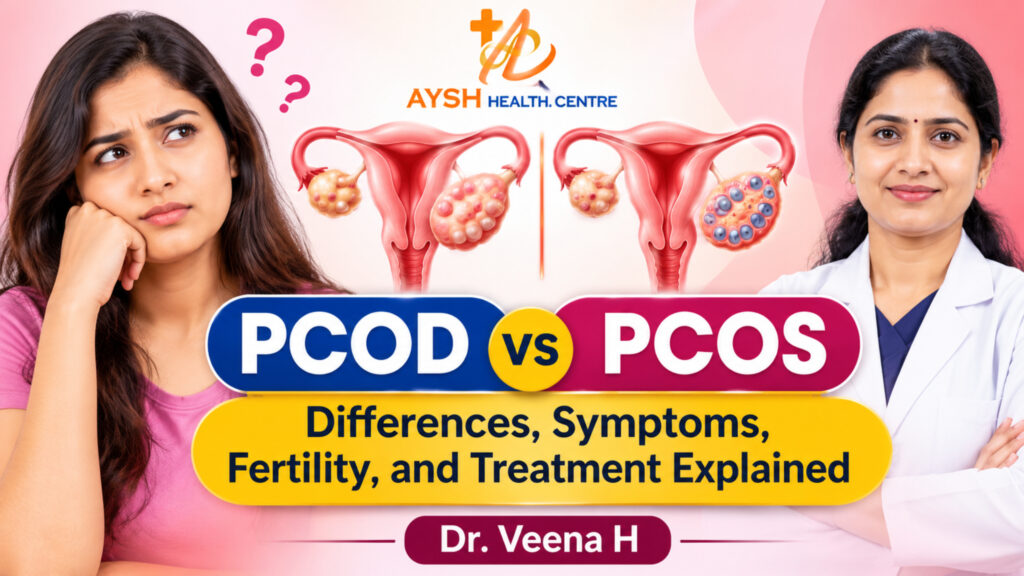
The main difference is how the terms are used and how broadly the condition is understood. PCOD is a commonly used term in India, while PCOS is the established medical term for a hormonal and metabolic syndrome.
It is important to understand that PCOD and PCOS are not universally recognised as two separate conditions with clearly defined levels of severity. A doctor should assess the actual symptoms, hormone levels, menstrual pattern and metabolic health rather than relying only on the label.
| Feature | PCOD | PCOS |
|---|---|---|
| Full form | Polycystic Ovarian Disease | Polycystic Ovary Syndrome |
| Common usage | Frequently used in India | Widely used medical term internationally |
| Hormonal changes | May involve increased androgen levels | Often associated with androgen excess |
| Menstrual cycle | Irregular periods may occur | Irregular or absent periods may occur |
| Ovulation | May be irregular | Ovulation may be irregular or absent |
| Metabolic concerns | May be present | Insulin resistance and metabolic risks are recognised concerns |
| Fertility | Pregnancy may be possible naturally or with treatment | Fertility may be affected by irregular ovulation |
| Management | Depends on symptoms and health needs | Individualised hormonal, metabolic and fertility management |
The presence of multiple follicles on an ultrasound does not automatically mean a woman has PCOS. Similarly, a woman can have PCOS even if an ultrasound does not show polycystic ovarian morphology.
What Causes PCOD and PCOS?
The exact cause of PCOS is not fully understood. It is believed to involve a combination of hormonal, genetic and metabolic factors. PCOD is also commonly discussed in connection with hormonal imbalance and ovarian function.
Some factors associated with these conditions include:
1. Hormonal Imbalance
Changes in reproductive hormones can interfere with normal ovulation and menstrual cycles. Higher androgen levels may contribute to acne, unwanted facial hair and scalp hair thinning.
2. Insulin Resistance
Insulin helps the body use glucose for energy. In some women with PCOS, the body’s cells do not respond effectively to insulin. The body may produce more insulin to compensate, which can contribute to increased androgen production and affect ovulation.
3. Genetic Factors
A family history of PCOS or related hormonal and metabolic concerns may increase the likelihood of developing the condition. However, having a family history does not mean every woman will develop PCOS.
4. Weight and Metabolic Health
Weight gain can worsen some symptoms in certain women, particularly when insulin resistance is present. However, PCOS can also affect women with a healthy body weight.
5. Lifestyle and Other Health Factors
Sleep patterns, stress, nutrition and physical activity can influence general metabolic and reproductive health. These factors may affect symptom management, but they should not be considered the sole cause of PCOS.
Common Symptoms of PCOD and PCOS
The symptoms of PCOD and PCOS can overlap. Some women notice menstrual changes first, while others seek medical advice because of acne, unwanted hair growth or fertility concerns.
1. Irregular Menstrual Periods
Irregular periods are among the most common signs associated with PCOD and PCOS. Periods may occur less frequently than expected, become unpredictable or stop for several months.
This can happen when ovulation does not occur regularly. Persistent menstrual irregularities should be evaluated rather than automatically attributed to hormonal imbalance.
2. Weight Gain
Some women experience weight gain or find it difficult to lose weight. Insulin resistance may contribute to metabolic changes in certain women with PCOS.
However, weight gain is not present in every case, and a normal body weight does not rule out PCOS.
3. Acne and Oily Skin
Increased androgen activity can stimulate oil production in the skin. This may lead to persistent acne, particularly around the chin, jawline, chest and back.
4. Excess Facial and Body Hair
Some women develop thicker or darker hair on the chin, upper lip, chest, abdomen or other areas. This is known as hirsutism and may be associated with increased androgen levels.
5. Hair Thinning
Hormonal changes may contribute to thinning hair on the scalp or female-pattern hair loss. The extent of hair thinning differs from person to person.
6. Difficulty Conceiving
Irregular or absent ovulation can make it difficult to predict the fertile window. This may reduce the number of opportunities for conception and sometimes lead to fertility concerns.
How Do PCOD and PCOS Affect Fertility?
One of the biggest concerns for women diagnosed with PCOD or PCOS is whether they will be able to become pregnant. The good news is that PCOD and PCOS do not automatically mean infertility.
Many women with PCOS conceive naturally. Others may need medical support to improve ovulation and increase their chances of pregnancy.
1. Irregular Ovulation
A regular menstrual cycle often involves the release of an egg from an ovary. This process is called ovulation. In women with PCOS, hormonal changes may prevent ovulation from happening regularly.
When ovulation is unpredictable, identifying the most fertile days can become difficult.
2. Difficulty Predicting the Fertile Window
Women with irregular periods may not ovulate on the same day every month. This can make calendar-based fertility tracking less reliable.
A gynecologist may recommend appropriate ovulation tracking or monitoring based on the woman’s menstrual history and pregnancy goals.
3. Hormonal Imbalance
Increased androgen levels and insulin resistance may contribute to irregular ovulation. Addressing these factors can form part of a fertility management plan.
4. Pregnancy Is Still Possible
Many women with PCOS become pregnant naturally, while others benefit from medical treatment. Fertility care may include lifestyle support, ovulation-induction medication and monitoring, depending on the individual’s condition.
Women with very irregular or absent periods should consider seeking medical advice early rather than waiting for a prolonged period of unsuccessful attempts to conceive.
For additional guidance, read PCOS and pregnancy: Can you conceive naturally?.
How Are PCOD and PCOS Diagnosed?
There is no single test that confirms PCOS in every woman. Diagnosis involves understanding the patient’s symptoms, menstrual history, examination findings and appropriate investigations.
For adults, doctors commonly use diagnostic criteria that consider three features. At least two may be required for a diagnosis after other possible causes are excluded.
1. Medical History and Symptom Assessment
The gynecologist may ask about:
-
Menstrual cycle frequency and regularity
-
Acne and excess facial or body hair
-
Hair thinning
-
Weight changes
-
Previous pregnancy or fertility concerns
-
Family history of hormonal or metabolic conditions
2. Blood Tests
Blood investigations may be recommended to assess hormone levels and rule out other conditions that can cause similar symptoms.
Depending on the patient’s presentation, tests may include androgen levels, thyroid function, prolactin and other hormone assessments.
Blood sugar and lipid tests may also be advised to evaluate metabolic health.
3. Ultrasound Examination
A pelvic ultrasound may be used to assess the ovaries and uterus. It can help identify polycystic ovarian morphology and evaluate other possible pelvic concerns.
However, an ultrasound alone cannot confirm PCOS. Some women with PCOS do not have polycystic ovarian morphology, while some women without PCOS may show multiple small follicles.
4. Excluding Other Conditions
Thyroid disorders, elevated prolactin and certain other hormonal conditions can cause symptoms similar to PCOS. A doctor may recommend additional tests to identify or rule out these conditions.
In adolescents, diagnosis requires particular care because irregular periods and ovarian appearances can be part of normal puberty-related changes. Ultrasound alone should not be used to diagnose PCOS in adolescents.
Treatment Options for PCOD and PCOS
There is no single treatment that works for every woman. The right approach depends on symptoms, age, medical history, metabolic health and whether the woman is planning pregnancy.
The aim of PCOD treatment and PCOS treatment is to manage symptoms, support regular menstrual cycles where needed, improve metabolic health and address fertility concerns.
1. Lifestyle Changes
Lifestyle management is an important part of PCOS care. A balanced routine may help improve metabolic health and support symptom management.
Helpful habits may include:
-
Eating a balanced diet with vegetables, fruits, whole grains and suitable protein sources
-
Limiting excessive intake of highly processed foods and sugary drinks
-
Engaging in regular physical activity
-
Maintaining a consistent sleep schedule
-
Managing stress through healthy activities
-
Working towards a sustainable weight goal when medically appropriate
Lifestyle changes can be beneficial even when weight loss is not required. Women should avoid crash diets and extreme exercise routines.
2. Medication for Menstrual Regulation
A doctor may prescribe hormonal medication to help regulate periods or protect the uterine lining when periods are very infrequent.
The choice of medication depends on the patient’s medical history, symptoms and whether pregnancy is desired.
3. Treatment for Acne and Excess Hair Growth
When acne or unwanted hair growth is associated with increased androgen levels, treatment may include prescribed hormonal medication or other suitable dermatological options.
Some treatments are not appropriate during pregnancy or when actively trying to conceive. Medical guidance is important before starting them.
4. Managing Insulin Resistance
For women with insulin resistance or specific metabolic concerns, a doctor may consider medication such as metformin alongside lifestyle measures.
It is not necessary or suitable for every woman with PCOS. The decision should be based on individual clinical findings.
5. Fertility Treatment
Women who are planning pregnancy and experiencing irregular ovulation may benefit from fertility evaluation.
Depending on the situation, treatment may include ovulation-induction medication and monitoring. Other fertility factors, including the partner’s reproductive health, may also need assessment.
6. Regular Health Monitoring
PCOS can be associated with an increased risk of impaired glucose tolerance, type 2 diabetes and other metabolic concerns. Regular follow-up may include monitoring blood pressure, blood sugar, cholesterol and other health indicators as advised by the doctor.
Can PCOD or PCOS Be Cured Permanently?
PCOS is generally considered a long-term condition rather than an illness with a guaranteed permanent cure. However, its symptoms can often be managed effectively through lifestyle changes, medical treatment and regular monitoring.
The symptoms may change at different stages of life. Some women notice improvements in menstrual regularity or other symptoms after appropriate treatment, while others may need ongoing care.
The important thing is to identify the specific concerns and follow a treatment plan that suits the individual’s health needs.
When Should You Consult a Gynecologist?
Occasional menstrual changes can happen for different reasons. However, persistent symptoms should not be ignored.
Consider consulting a gynecologist if you experience:
-
Periods that are consistently irregular or absent
-
Very long gaps between menstrual cycles
-
Persistent acne or oily skin
-
Unwanted facial or body hair growth
-
Unexplained hair thinning
-
Difficulty conceiving
-
Sudden or significant changes in weight
-
Darkened, thickened skin around the neck or underarms, which may be associated with insulin resistance
Seek prompt medical assessment if you experience severe pelvic pain, unusually heavy bleeding, fainting or a possibility of pregnancy accompanied by pain or bleeding.
Early evaluation can help identify the underlying cause and reduce the risk of complications associated with untreated menstrual or metabolic concerns.
Why Is Early Diagnosis Important?
Early diagnosis can help women understand the reasons behind their symptoms and make informed decisions about treatment and future pregnancy planning.
When PCOS is left unevaluated, persistent irregular ovulation may lead to prolonged gaps between periods. In some women, long-term absence of periods can increase the risk of excessive thickening of the uterine lining.
PCOS may also be associated with insulin resistance, high blood sugar, abnormal cholesterol levels and other metabolic concerns.
Regular medical follow-up helps identify these risks and supports appropriate care. It can also provide reassurance and guidance to women who are worried about their fertility.
PCOD vs PCOS: Frequently Asked Questions
1. Is PCOD the same as PCOS?
PCOD and PCOS are terms commonly used to describe overlapping ovarian and hormonal concerns. PCOS is the established medical term for a hormonal and metabolic syndrome. The terms are not consistently defined as two separate conditions, so diagnosis should be based on clinical findings rather than the label alone.
2. Which is more serious, PCOD or PCOS?
It is not medically accurate to assume that PCOS is always more severe than PCOD. The seriousness depends on the individual’s symptoms, ovulation pattern, hormone levels and metabolic health. A proper evaluation helps determine the risks and treatment needs.
3. Can women with PCOD get pregnant?
Yes. Many women described as having PCOD can become pregnant naturally. If irregular ovulation is affecting conception, a gynecologist may recommend treatment to support ovulation.
4. Can women with PCOS get pregnant naturally?
Yes. Many women with PCOS conceive naturally. Others may need medical support, particularly when ovulation is irregular or absent. PCOS does not automatically mean infertility.
5. Does PCOD cause irregular periods?
Yes. Hormonal changes and irregular ovulation may contribute to delayed, infrequent or unpredictable periods. Persistent menstrual irregularities should be evaluated by a gynecologist.
6. Can PCOS occur in women with normal weight?
Yes. PCOS can affect women of different body sizes. Being underweight or having a normal body weight does not rule out the condition.
7. Does every woman with PCOS have ovarian cysts?
No. The name can be misleading. PCOS diagnosis does not always require cysts or polycystic ovarian appearance on ultrasound. Diagnosis is based on a combination of clinical and investigation findings.
8. Can lifestyle changes improve PCOS symptoms?
Lifestyle measures such as balanced nutrition, regular physical activity and adequate sleep can support metabolic health and may improve some symptoms. They are often part of long-term PCOS management, but some women also require medication.
9. When should I consult a doctor for irregular periods?
If your periods are repeatedly irregular, you miss periods for several months, or you are experiencing symptoms such as excess facial hair, persistent acne or difficulty conceiving, consult a gynecologist for evaluation.
10. Who can I consult for PCOD or PCOS treatment in Bangalore?
Women experiencing PCOD or PCOS symptoms can seek a gynecological assessment to understand their condition and treatment options. Dr. Veena H is featured by Aysh Healthcare as a gynecologist with experience in women’s healthcare. You can learn more through the PCOS care information at Aysh Healthcare.
Conclusion
Understanding PCOD vs PCOS is an important step towards better hormonal and reproductive health. Although the terms are often used interchangeably, PCOS is the established medical diagnosis for a condition that can affect menstrual cycles, ovulation, skin health, metabolism and fertility.
Irregular periods, acne, excess facial hair, weight-related concerns and difficulty conceiving may be signs that a woman needs a hormonal assessment. However, these symptoms can also occur due to other health conditions, so self-diagnosis should be avoided.
The good news is that many women with PCOS can manage their symptoms and achieve pregnancy with appropriate care. Early diagnosis, personalised treatment, healthy lifestyle habits and regular follow-up can make a meaningful difference.
If you are experiencing irregular periods, hormonal symptoms or fertility concerns, consulting a gynecologist can help you understand the cause and explore suitable treatment options. At Aysh Healthcare, Dr. Veena H provides women’s healthcare guidance, including care related to PCOS, menstrual concerns and pregnancy planning.
Contact Details
Clinic: Aysh Healthcare
Doctor: Dr. Veena H
Speciality: Gynaecology
Location: Bangalore
Website: https://ayshhealthcare.com/