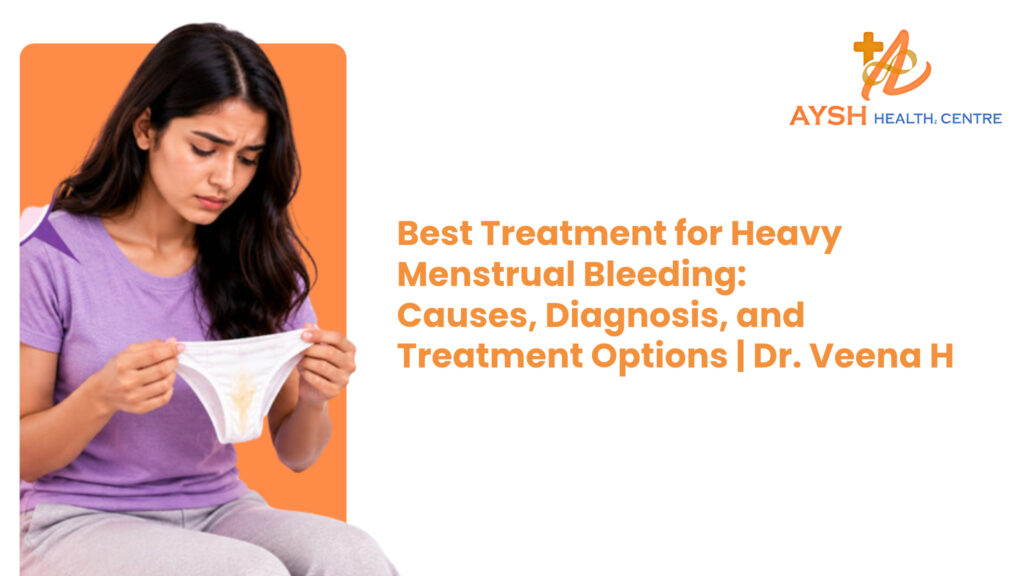
Heavy menstrual bleeding can affect more than just your menstrual cycle. It may interfere with work, sleep, exercise and everyday activities. Some women experience periods that last longer than usual, while others need to change sanitary pads very frequently or pass large blood clots. When menstrual bleeding becomes unusually heavy or prolonged, it is important to understand the possible cause rather than dismissing it as a normal part of menstruation.
Heavy menstrual bleeding, also known as menorrhagia, can be associated with hormonal changes, uterine fibroids, polyps, thyroid disorders and other gynaecological or medical conditions. The right treatment depends on the underlying cause, the severity of bleeding, age, medical history and future pregnancy plans.
Women looking for Heavy Menstrual Bleeding Treatment in Bangalore can explore the women’s healthcare information provided by Aysh Healthcare and consult a qualified gynaecologist. Dr. Veena H is featured on the clinic’s website for gynaecological care, including menstrual health concerns.
What Is Heavy Menstrual Bleeding?
Heavy menstrual bleeding refers to menstrual flow that is unusually heavy, lasts longer than expected or significantly affects a woman’s daily routine. It may occur regularly or develop as a change in a previously normal menstrual pattern.
The amount of blood lost during a period can be difficult to measure at home. Therefore, doctors also consider how frequently sanitary products need to be changed, how long bleeding lasts and whether symptoms such as fatigue or dizziness are present.
Common signs of heavy menstrual bleeding include:
-
Bleeding that lasts longer than seven days
-
Needing to change a fully soaked sanitary pad or tampon very frequently
-
Passing large blood clots during menstruation
-
Bleeding that interrupts sleep or daily activities
-
Feeling unusually tired, weak or dizzy during or after periods
-
Experiencing breathlessness that may be related to anaemia
-
Menstrual bleeding that is significantly heavier than your usual pattern
If heavy bleeding is accompanied by fainting, severe dizziness, chest pain, breathlessness or extreme weakness, seek urgent medical attention. Heavy bleeding during a possible or confirmed pregnancy also requires prompt assessment.
What Causes Heavy Menstrual Bleeding?
There are several possible reasons for unusually heavy periods. Identifying the cause is essential because treatment for hormonal problems may differ from treatment for fibroids, polyps or bleeding disorders.
1. Hormonal Imbalance
Hormones such as oestrogen and progesterone help regulate the menstrual cycle and the growth of the uterine lining. When ovulation is irregular or hormone levels are disrupted, the uterine lining may build up and shed unpredictably, sometimes resulting in heavy or prolonged bleeding.
Hormonal changes can occur during adolescence, perimenopause and in certain conditions that affect ovulation.
2. Uterine Fibroids
Fibroids are non-cancerous growths that develop in or around the uterus. Their size and location can influence menstrual symptoms.
Some women with fibroids experience:
-
Heavy or prolonged periods
-
Pelvic pressure or discomfort
-
Abdominal fullness
-
Frequent urination
-
Pain during menstruation
Not every fibroid causes symptoms. A pelvic ultrasound can help identify fibroids and assess their location and size.
3. Uterine Polyps
Uterine polyps are growths that develop from the inner lining of the uterus. They may cause heavy periods, irregular bleeding or spotting between menstrual cycles.
The doctor may recommend an ultrasound or hysteroscopy, depending on the symptoms and initial findings.
4. Polycystic Ovary Syndrome (PCOS)
PCOS Treatment in Bangalore may be relevant for women whose menstrual problems are associated with polycystic ovary syndrome.
PCOS can affect ovulation and lead to irregular menstrual cycles. Some women may have long gaps between periods followed by prolonged or heavy bleeding. Other symptoms can include acne, excess facial hair, scalp hair thinning and difficulty conceiving.
Not every woman with heavy periods has PCOS. A gynaecological assessment is needed to determine whether PCOS or another condition is responsible.
5. Thyroid Disorders
The thyroid gland plays an important role in regulating metabolism and several body functions, including aspects of reproductive health. Both underactive and overactive thyroid conditions can affect menstrual patterns.
If your symptoms or medical history suggest a thyroid problem, your doctor may recommend thyroid function tests.
6. Bleeding Disorders
Certain inherited or acquired conditions affect the body’s ability to form blood clots. These can contribute to unusually heavy menstrual bleeding.
A bleeding disorder may be considered if heavy periods began during adolescence or occur alongside frequent nosebleeds, easy bruising or excessive bleeding after dental procedures or surgery.
7. Medicines and Other Medical Conditions
Some medicines, including anticoagulants, can increase menstrual bleeding. Other possible causes include certain infections, pregnancy-related complications and conditions affecting the uterine lining.
It is important to share your current medicines and medical history with your gynaecologist during the consultation.
How Is Heavy Menstrual Bleeding Diagnosed?
The first step in diagnosis is understanding your menstrual pattern and identifying symptoms that may point towards an underlying condition. Your gynaecologist will recommend investigations based on your age, medical history, symptoms and examination findings.
1. Menstrual and Medical History
Your doctor may ask questions about:
-
How many days your period usually lasts
-
How frequently you need to change sanitary products
-
Whether you pass blood clots
-
Whether you experience pelvic pain or bleeding between periods
-
Whether your menstrual pattern has recently changed
-
Any medicines you take or existing medical conditions
-
Previous pregnancies and future pregnancy plans
Keeping a menstrual diary can help you provide accurate information during your appointment.
2. Physical and Pelvic Examination
A physical examination may be recommended depending on your symptoms and medical history. A pelvic examination may help assess possible causes of abnormal bleeding, but it is not required for every patient.
3. Blood Tests
Blood tests can help identify the effects of heavy bleeding and investigate possible underlying conditions. Your doctor may recommend:
-
Complete blood count (CBC) to check for anaemia
-
Iron studies or ferritin testing to assess iron stores
-
Thyroid function tests when a thyroid disorder is suspected
-
Pregnancy testing when pregnancy is possible
-
Other tests if a bleeding disorder or specific medical condition is suspected
Not every woman needs all these investigations. The tests are selected according to clinical findings.
4. Pelvic Ultrasound
A pelvic ultrasound scan can help assess the uterus, uterine lining and ovaries. It may identify fibroids, polyps or other structural changes that could contribute to abnormal bleeding.
The type and timing of the scan depend on the individual patient’s circumstances.
5. Hysteroscopy or Endometrial Biopsy
In selected cases, additional investigations may be recommended.
A hysteroscopy allows the doctor to examine the inside of the uterus using a thin instrument with a camera. An endometrial biopsy involves collecting a small sample of the uterine lining for laboratory assessment.
These procedures are not necessary for everyone. Your gynaecologist will explain whether they are appropriate based on your age, symptoms, risk factors and initial test results.
Best Treatment Options for Heavy Menstrual Bleeding
There is no single treatment that works for every woman. The best treatment for heavy menstrual bleeding depends on the cause, severity of symptoms, general health and whether you wish to become pregnant in the future.
1. Medicines to Reduce Menstrual Bleeding
Certain medicines can help reduce menstrual blood loss during periods. The choice depends on the patient’s medical history and the reason for the bleeding.
Tranexamic Acid: This medicine helps reduce bleeding by supporting the body’s blood-clotting process. It may be prescribed during menstrual bleeding for suitable patients. It is not appropriate for everyone, particularly some people with a history or risk of blood clots.
Non-Steroidal Anti-Inflammatory Drugs (NSAIDs): Certain medicines in this group may reduce menstrual blood loss and help relieve period pain. They may not be suitable for people with specific stomach, kidney, bleeding or other medical conditions.
These medicines should only be used after medical advice. Do not self-medicate or use someone else’s prescription to control heavy periods.
2. Hormonal Treatment
Hormonal treatment may be recommended when heavy menstrual bleeding is associated with hormonal changes or irregular ovulation.
Options may include:
Levonorgestrel-Releasing Intrauterine System (LNG-IUS): This is a hormonal device placed inside the uterus. It can significantly reduce menstrual bleeding in suitable patients.
Combined Hormonal Contraceptives: These may help regulate menstrual cycles and reduce bleeding for women who are medically suitable for this treatment.
Progestogen Treatment: Depending on the menstrual pattern and underlying cause, a doctor may prescribe progestogen-based medication to help manage bleeding.
Your gynaecologist will discuss possible benefits, side effects and suitability, particularly if you are planning pregnancy.
3. Iron Supplements for Anaemia
Repeated heavy menstrual bleeding can cause iron deficiency and anaemia. When the body loses more blood than it can replace, iron stores may become depleted.
Possible symptoms include:
-
Persistent tiredness
-
Weakness
-
Dizziness
-
Headaches
-
Reduced exercise tolerance
-
Breathlessness
If tests confirm iron deficiency, your doctor may recommend iron supplements, dietary changes or other treatment depending on the severity.
Iron treatment helps address deficiency but does not necessarily stop the underlying menstrual bleeding. Both issues may need to be managed.
4. Treatment for Uterine Fibroids and Polyps
If fibroids or polyps are responsible for heavy periods, treatment may focus on the specific uterine condition.
Depending on their size, location and symptoms, options may include medication, hysteroscopic removal of selected polyps or fibroids, or other procedures.
The treatment plan should also consider whether the patient wants to preserve fertility.
5. Surgical Treatment
Surgical treatment may be considered when medicines have not provided sufficient relief, symptoms are severe or a specific structural condition requires intervention.
Possible procedures include:
-
Hysteroscopic treatment: Used to examine and treat selected problems inside the uterus.
-
Fibroid removal: Certain fibroids may be removed through a procedure chosen according to their size and location.
-
Endometrial ablation: A procedure that treats the uterine lining to reduce menstrual bleeding. It is intended for carefully selected patients who do not plan future pregnancies.
-
Hysterectomy: Surgical removal of the uterus. It is a major operation and is considered only in selected circumstances after discussion of other treatment options. It permanently ends the ability to carry a pregnancy.
Your doctor should explain the risks, benefits, recovery requirements and effect on future fertility before recommending a procedure.
Can Heavy Menstrual Bleeding Be Treated Without Surgery?
Yes. Many women can manage heavy periods with non-surgical treatment, depending on the underlying cause.
Options may include:
-
Medicines that reduce menstrual blood loss
-
Hormonal treatment
-
Treatment for thyroid or other contributing conditions
-
Management of PCOS-related menstrual problems
-
Iron supplementation when iron deficiency is confirmed
However, non-surgical treatment may not be enough for every patient. Some fibroids, polyps or persistent bleeding conditions may require a procedure.
The most suitable heavy periods treatment in Bangalore should be selected after a gynaecological assessment. The aim is to manage the bleeding while considering the woman’s overall health and reproductive goals.
When Should You Consult a Gynecologist for Heavy Periods?
It is important not to ignore repeated changes in menstrual bleeding. Consider consulting a gynaecologist if:
-
Your periods are consistently heavier than usual.
-
Bleeding continues for more than seven days.
-
You frequently pass large blood clots.
-
You experience bleeding between periods or after sexual intercourse.
-
Your periods interfere with your work, sleep or everyday activities.
-
You experience persistent tiredness, dizziness or weakness.
-
You have pelvic pain or pressure along with heavy bleeding.
-
Your menstrual pattern changes suddenly after previously regular cycles.
Seek urgent medical care if very heavy bleeding is accompanied by fainting, severe dizziness, chest pain, breathlessness or severe weakness. If pregnancy is possible and you experience bleeding, seek prompt medical advice rather than assuming it is a normal period.
Lifestyle Tips for Women Experiencing Heavy Periods
Healthy habits can support general wellbeing, particularly when heavy bleeding contributes to tiredness or iron deficiency. However, lifestyle changes cannot replace medical treatment when an underlying condition is present.
Include Iron-Rich Foods
Include foods such as lentils, beans, leafy green vegetables and other iron-rich foods in your diet. Vitamin C-rich foods, such as citrus fruits, can help the body absorb iron from plant-based sources.
Maintain a Balanced Diet
Eat a varied diet containing vegetables, fruits, whole grains and suitable protein sources. If you experience persistent fatigue, ask your doctor whether you need testing for iron deficiency or anaemia.
Track Your Menstrual Cycle
Record the first and last days of your period, the frequency of sanitary product changes, the presence of clots and any associated symptoms. This information can help your gynaecologist understand your bleeding pattern.
Get Adequate Rest
Heavy bleeding and anaemia can contribute to fatigue. Maintain a consistent sleep routine where possible and seek medical advice if weakness or tiredness continues.
Attend Follow-Up Appointments
Follow-up visits help your doctor assess whether the treatment is working and whether further investigations or adjustments are needed.
Do not rely on home remedies alone to manage persistent or unusually heavy menstrual bleeding.
Why Consult Dr. Veena H at Aysh Healthcare?
Choosing a gynaecologist for menstrual health concerns is important because heavy periods can have several different causes. A proper assessment helps identify the reason for bleeding and determine whether medication, hormonal treatment or a procedure may be appropriate.
Dr. Veena H is featured on the official Aysh Healthcare website as a gynaecologist with over 22 years of experience. The clinic’s published women’s healthcare information covers menstrual concerns, PCOS, pregnancy care and related gynaecological topics.
Women looking for a Gynecologist in Bangalore can explore the information available through Aysh Healthcare and enquire about a consultation with Dr. Veena H.
During your appointment, share your menstrual history, previous test reports, current medicines and future pregnancy plans. These details can help the doctor decide which investigations and treatment options are suitable for you.
Frequently Asked Questions About Heavy Menstrual Bleeding
1. What is the best treatment for heavy menstrual bleeding?
The best treatment depends on the underlying cause. Options may include medicines to reduce bleeding, hormonal treatment, iron supplements for confirmed deficiency, or procedures for conditions such as fibroids and polyps.
2. Is heavy menstrual bleeding dangerous?
Persistent heavy periods can lead to iron deficiency and anaemia. They may also be associated with conditions such as fibroids, polyps or hormonal disorders. Severe bleeding accompanied by fainting, chest pain or breathlessness requires urgent medical attention.
3. Can hormonal imbalance cause heavy periods?
Yes. Hormonal changes that affect ovulation and the growth of the uterine lining can cause prolonged or heavy menstrual bleeding. Other possible causes should also be evaluated.
4. Can heavy periods cause anaemia?
Yes. Repeated or prolonged blood loss can reduce the body’s iron stores and lead to anaemia. A doctor may recommend a complete blood count and iron tests if deficiency is suspected.
5. Can heavy menstrual bleeding be treated naturally?
A balanced diet, adequate rest and tracking your menstrual cycle can support general health. However, these measures may not correct the underlying cause of heavy bleeding. Persistent symptoms should be assessed by a healthcare professional.
6. Do all women with heavy periods need surgery?
No. Many women can manage heavy menstrual bleeding with medicines or hormonal treatments. Surgery is considered only when clinically appropriate, depending on the cause, severity and response to other treatments.
7. When should I worry about heavy menstrual bleeding?
Consult a gynaecologist if bleeding lasts longer than seven days, repeatedly disrupts daily activities, or is accompanied by fatigue, dizziness or pelvic pain. Seek urgent care for very heavy bleeding with fainting, severe weakness, chest pain or difficulty breathing.
8. Can I get pregnant if I have heavy menstrual bleeding?
Heavy periods do not automatically mean infertility. Fertility depends on the underlying cause. Some conditions, including certain fibroids and ovulation-related disorders, may affect conception, so discuss your pregnancy plans with your gynaecologist.
9. What tests are required to diagnose heavy periods?
Depending on your symptoms, your doctor may recommend a complete blood count, iron studies, thyroid tests, pregnancy testing, pelvic ultrasound or selected additional investigations. Not every woman needs every test.
10. Can fibroids cause heavy menstrual bleeding?
Yes. Uterine fibroids can cause heavy or prolonged periods, depending on their size and location. A pelvic ultrasound may help identify them and guide further treatment decisions.
Conclusion
Heavy menstrual bleeding can affect energy levels, physical comfort and everyday activities. Although menstrual flow varies between women, unusually heavy or prolonged bleeding should not be ignored. It may be related to hormonal changes, fibroids, polyps, thyroid disorders or other medical conditions.
The most effective approach is to identify the underlying cause and choose treatment according to your symptoms, medical history and future pregnancy plans. Options may include medication, hormonal treatment, management of iron deficiency or procedures for selected uterine conditions.
If you are experiencing persistent heavy periods, consider consulting a gynaecologist for an appropriate evaluation. Women seeking Heavy Menstrual Bleeding Treatment in Bangalore can explore the women’s healthcare information at Aysh Healthcare and enquire about consultation with Dr. Veena H.
Contact Aysh Healthcare
Clinic: Aysh Healthcare
Doctor: Dr. Veena H
Speciality: Gynaecology
Location: Bangalore, Karnataka
Website: https://ayshhealthcare.com/
Appointments: Contact the clinic through its official website for consultation details.