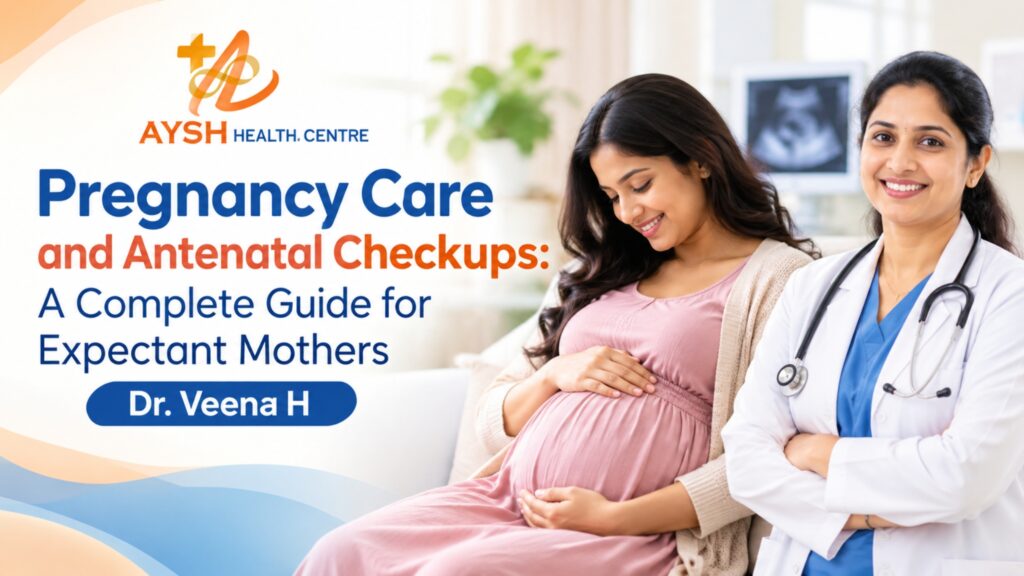
Pregnancy is a special journey that brings excitement, anticipation, and many questions about the health of the mother and baby. From the first positive pregnancy test to the final weeks before delivery, regular medical care plays an important role in monitoring the pregnancy, identifying potential concerns early, and preparing expectant mothers for childbirth.
Pregnancy care and antenatal checkups help track the baby’s growth, monitor the mother’s health, and provide guidance on nutrition, physical activity, supplements, and birth preparation. With timely consultations and personalised medical advice, expectant mothers can make informed decisions throughout pregnancy.
At Aysh Healthcare, women seeking guidance from an experienced gynecologist can explore pregnancy-related information and care from Dr. Veena H, whose profile on the clinic website highlights more than 22 years of experience.
What Is Pregnancy Care and Why Is It Important?
Pregnancy care refers to the medical guidance and monitoring a woman receives from early pregnancy until delivery. It includes routine consultations, recommended screening tests, nutritional advice, monitoring of the baby’s development, and support for the mother’s physical and emotional well-being.
Antenatal checkups are scheduled appointments during pregnancy that allow a gynecologist to assess the progress of the pregnancy and identify health concerns that may need further evaluation.
Regular antenatal care can help to:
-
Monitor the mother’s blood pressure, weight, and general health.
-
Assess the baby’s growth and development.
-
Identify conditions such as anaemia, gestational diabetes, or pregnancy-related hypertension.
-
Review prescribed medicines, vitamins, and supplements.
-
Provide guidance on diet, activity, rest, and common pregnancy symptoms.
-
Prepare the mother for labour, delivery, and postnatal recovery.
The number and timing of appointments depend on the stage of pregnancy, medical history, and individual risk factors. Women with high-risk pregnancies may need additional visits or specialised monitoring.
When Should You Have Your First Antenatal Checkup?
It is advisable to arrange your first pregnancy appointment as soon as you know or strongly suspect that you are pregnant. Early consultation helps establish the estimated stage of pregnancy, review your medical history, and plan the tests and care you may need.
During the first visit, your gynecologist may discuss:
-
The date of your last menstrual period and your estimated due date.
-
Previous pregnancies, miscarriages, or pregnancy complications, if applicable.
-
Existing medical conditions and family health history.
-
Medicines, supplements, allergies, and lifestyle habits.
-
Recommended blood and urine tests.
-
The timing of an ultrasound scan, where appropriate.
Early antenatal care in Bangalore can be particularly helpful for women who have irregular menstrual cycles, pre-existing health conditions, or concerns about previous pregnancies. The exact schedule should be decided with your healthcare professional.
Antenatal Checkups by Trimester
Pregnancy is commonly divided into three trimesters. Each stage involves different developmental milestones and monitoring needs.
First Trimester: Weeks 1–12
The first trimester is an important period for confirming the pregnancy, assessing early development, and reviewing the mother’s health.
During this stage, your gynecologist may recommend:
-
Confirmation of pregnancy and assessment of gestational age.
-
Blood tests to check haemoglobin, blood group, Rh factor, and other relevant health indicators.
-
Urine testing and infection screening when indicated.
-
An ultrasound scan at the appropriate stage to assess the pregnancy.
-
Folic acid and other supplements based on individual needs.
-
Advice on nausea, fatigue, hydration, diet, and daily activities.
The first trimester is also a good time to discuss any previous medical conditions or medicines that may need review. Do not stop prescribed medicines or start supplements without medical advice.
Second Trimester: Weeks 13–27
During the second trimester, many women find that early symptoms such as nausea begin to improve. Antenatal appointments continue to assess the mother’s health and the baby’s growth.
Your healthcare professional may recommend:
-
Monitoring blood pressure, weight, and symptoms.
-
An ultrasound examination to assess the baby’s anatomy at the recommended time.
-
Screening for gestational diabetes, commonly around 24–28 weeks, depending on local guidance and individual risk.
-
Assessment of haemoglobin and other tests when needed.
-
Guidance on balanced nutrition, physical activity, and appropriate weight gain.
-
Discussion of fetal movements as pregnancy progresses.
Regular gynecologist consultations during pregnancy help ensure that test results are reviewed and that any concerns are addressed promptly.
Third Trimester: Weeks 28–Delivery
The third trimester focuses on monitoring the baby’s growth, checking the mother’s health, and preparing for labour and delivery.
Antenatal care may include:
-
Monitoring blood pressure and symptoms that could indicate complications.
-
Assessing the baby’s growth and position when appropriate.
-
Discussing fetal movement patterns.
-
Reviewing any additional blood tests or scans required.
-
Discussing labour signs, delivery options, and birth preferences.
-
Planning for hospital admission, breastfeeding, and postnatal care.
The frequency of appointments may increase as the due date approaches. Your gynecologist will recommend a schedule based on your pregnancy and clinical findings.
Essential Tests During Pregnancy
Pregnancy-related tests help your healthcare professional understand the mother’s health and monitor the baby’s development. Not every test is necessary for every woman; recommendations depend on medical history, pregnancy stage, and clinical findings.
Common investigations may include:
1. Blood tests: These may assess haemoglobin levels, blood group, Rh factor, immunity, and selected infections.
2. Urine tests: These can help detect urinary infections, protein in the urine, and other concerns when indicated.
3. Ultrasound scans: Ultrasound examinations help assess the pregnancy, fetal development, and anatomy at recommended stages.
4. Gestational diabetes screening: This test checks for diabetes that develops during pregnancy. Screening is commonly offered between 24 and 28 weeks, although earlier testing may be advised for some women.
5. Blood pressure monitoring: Regular checks help identify high blood pressure and possible signs of pregnancy-related complications.
Your gynecologist will explain the purpose, timing, and results of the tests recommended for you. Attending appointments and completing advised investigations are important parts of pregnancy care and antenatal checkups.
Nutrition and Lifestyle Tips for a Healthy Pregnancy
A balanced lifestyle supports the mother’s health and the baby’s development. Nutritional needs vary throughout pregnancy, so individual advice from a healthcare professional is valuable.
Eat a Balanced and Varied Diet
Include a variety of vegetables, fruits, whole grains, protein-rich foods, and suitable sources of calcium and iron. Protein sources may include lentils, beans, eggs, dairy products, fish, or well-cooked meat, depending on your dietary preferences.
For additional guidance, read the clinic’s pregnancy-related information on healthy diet during pregnancy.
Take Recommended Supplements
Folic acid is particularly important before conception and during early pregnancy. Your doctor may also recommend iron, calcium, vitamin D, or other supplements depending on your needs and test results. Avoid taking high-dose supplements without professional guidance.
Stay Hydrated
Drink enough water throughout the day, particularly in hot weather or when physically active. Adequate hydration can support general well-being and may help with constipation.
Stay Physically Active When Appropriate
For many women with uncomplicated pregnancies, moderate physical activity such as walking can be beneficial. However, the suitable type and intensity of exercise depend on your health and pregnancy. Ask your gynecologist before starting or continuing an exercise routine.
Avoid Harmful Substances and Unsafe Foods
Avoid alcohol, smoking, and recreational drugs during pregnancy. Limit caffeine according to your healthcare professional’s advice, and follow food-safety guidance by avoiding unpasteurised products and undercooked meat, eggs, seafood, or other foods that may carry infection risks.
Common Pregnancy Symptoms: What Is Normal?
Pregnancy can cause a range of physical changes. Some symptoms are common, but their severity and timing differ from person to person.
-
Nausea and vomiting: Often occur in early pregnancy. Persistent vomiting or an inability to keep fluids down requires medical assessment.
-
Fatigue: Tiredness is common, especially during the first and third trimesters.
-
Frequent urination: Hormonal changes and pressure on the bladder can increase the need to urinate.
-
Back discomfort: Changes in posture and body weight may contribute to back pain.
-
Heartburn and constipation: Hormonal changes can affect digestion.
-
Mild swelling: Some swelling may occur later in pregnancy, but sudden or significant swelling needs prompt assessment.
Do not assume that every symptom is a normal part of pregnancy. Discuss new, persistent, or worrying symptoms with your healthcare professional.
Warning Signs During Pregnancy That Need Immediate Medical Attention
Knowing when to seek help is an important part of antenatal care. Contact your healthcare professional promptly or seek urgent medical assessment if you experience:
-
Vaginal bleeding or leaking of fluid.
-
Severe or persistent abdominal pain.
-
Severe headache, blurred vision, or sudden swelling of the face or hands.
-
Fever or feeling seriously unwell.
-
Persistent vomiting with difficulty keeping fluids down.
-
Chest pain, difficulty breathing, or fainting.
-
A noticeable reduction in your baby’s usual movements once you have started feeling them regularly.
For severe symptoms, seek emergency care rather than waiting for your next scheduled appointment. Early assessment can help identify problems that need immediate treatment.
What Is a High-Risk Pregnancy?
A pregnancy may be considered high-risk when certain medical, pregnancy-related, or fetal factors increase the likelihood of complications. This does not automatically mean that a complication will occur; it means closer monitoring or specialist care may be appropriate.
Factors that may require additional attention include:
-
High blood pressure or diabetes.
-
Diabetes that develops during pregnancy.
-
Thyroid disorders or other significant medical conditions.
-
Multiple pregnancy, such as twins.
-
A history of certain pregnancy complications.
-
Certain maternal age-related or fetal health concerns.
Women with diabetes or other medical conditions may need an individualised monitoring plan. Aysh Healthcare’s Dr. Veena H gynecologist information and pregnancy-related articles include educational content on pregnancy care and diabetes during pregnancy.
If you have a high-risk pregnancy, follow your clinician’s recommended appointment schedule and do not miss advised tests.
How to Prepare for Your Antenatal Appointment
A little preparation can help you make the most of each consultation.
Before your appointment:
-
Note the first day of your last menstrual period, if known.
-
Carry previous medical records, ultrasound reports, and test results.
-
Make a list of medicines and supplements you take.
-
Write down symptoms, including when they started and how often they occur.
-
Prepare questions about nutrition, exercise, work, travel, and delivery.
-
Ask when your next appointment and recommended tests are due.
These steps help your gynecologist understand your concerns and provide guidance suited to your needs.
Choosing the Right Gynecologist for Pregnancy Care
Choosing a gynecologist you feel comfortable speaking with can make pregnancy care easier to navigate. Look for a qualified professional who explains test results clearly, discusses treatment options, addresses your concerns, and provides guidance on when to seek urgent care.
When considering pregnancy care in Bangalore, expectant mothers should look for a care plan that includes appropriate antenatal monitoring, individualised advice, and clear communication throughout pregnancy.
At Aysh Healthcare, you can explore the clinic’s Dr. Veena H gynecologist profile and pregnancy-related resources to learn more about available educational information and pregnancy topics.
The best care plan is one that reflects your medical history, the progress of your pregnancy, and your healthcare professional’s recommendations.
Frequently Asked Questions About Pregnancy Care and Antenatal Checkups
1. When should I start antenatal checkups?
Arrange your first appointment as soon as you know you are pregnant. Early assessment helps establish the stage of pregnancy and plan suitable tests and follow-up care.
2. How often should I visit my gynecologist during pregnancy?
The schedule depends on your pregnancy and health. Appointments are usually more frequent as pregnancy progresses, and high-risk pregnancies may require additional visits. Follow the schedule recommended by your gynecologist.
3. Are antenatal checkups necessary if I feel healthy?
Yes. Some pregnancy-related conditions may not cause noticeable symptoms in the early stages. Routine appointments and recommended screening tests can help identify concerns that might otherwise go unnoticed.
4. Which tests are usually recommended during pregnancy?
Common tests may include blood and urine investigations, ultrasound scans, blood pressure checks, and screening for gestational diabetes. Your doctor will decide which tests are appropriate and when they should be performed.
5. What foods should I avoid during pregnancy?
Avoid alcohol and foods that may carry a higher risk of foodborne infection, including undercooked meat and eggs and unpasteurised dairy products. Follow food-safety advice and discuss any dietary restrictions with your healthcare professional.
6. Can I exercise during pregnancy?
Many women with uncomplicated pregnancies can continue or begin suitable moderate activity. However, the right activity depends on individual circumstances. Consult your gynecologist before starting an exercise programme, particularly if you have complications or concerning symptoms.
7. What are the signs that I should seek urgent pregnancy care?
Vaginal bleeding, fluid leakage, severe abdominal pain, severe headache with visual changes, breathing difficulty, or reduced fetal movements after a regular pattern has developed require prompt medical assessment. Seek emergency help for severe symptoms.
8. Why is choosing an experienced gynecologist important?
An experienced gynecologist can assess your individual needs, guide you through recommended screening, explain symptoms, and help coordinate care when additional monitoring is necessary. The right clinician should also make it easy for you to ask questions and understand your options.
Conclusion
Pregnancy is a journey that benefits from timely medical guidance, regular monitoring, balanced nutrition, and awareness of warning signs. Pregnancy care and antenatal checkups help expectant mothers understand each stage of pregnancy and make informed decisions about their health and their baby’s development.
From the first consultation to preparation for delivery, follow your recommended appointment schedule, complete advised tests, and discuss any concerns with your gynecologist. Personalised care is especially important when a pregnancy involves additional medical risks.
For pregnancy-related information and guidance, visit Aysh Healthcare and explore the clinic’s Dr. Veena H gynecologist profile.