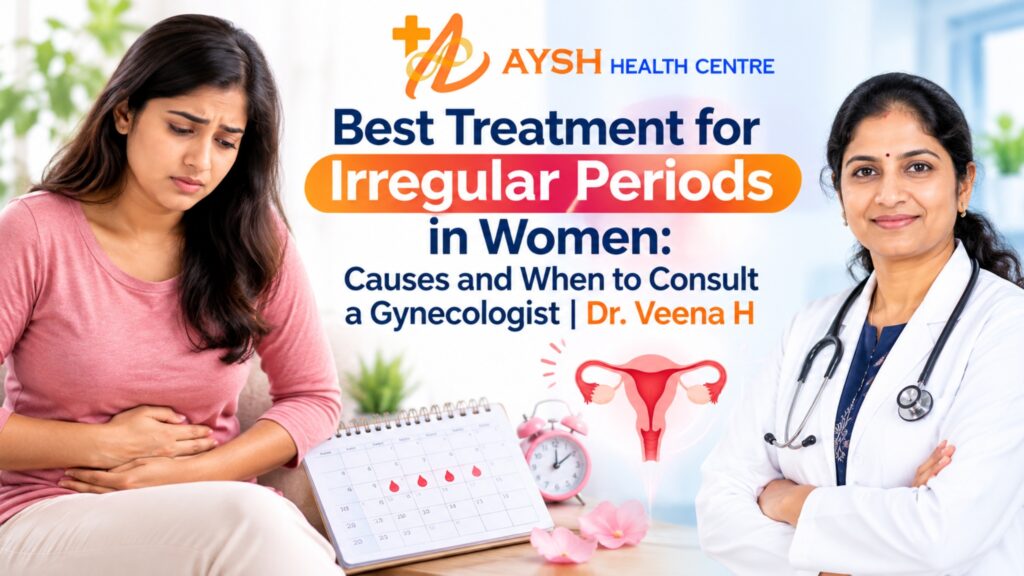
Irregular periods are a common menstrual concern among women of different age groups. Some women experience menstrual cycles that are shorter or longer than usual, while others may miss periods for several months or experience unexpected bleeding. Although occasional changes in the menstrual cycle can occur, persistent irregularity may indicate an underlying hormonal or gynaecological condition that needs medical attention.
Understanding the cause of irregular periods is the first step towards choosing the right treatment. Conditions such as Polycystic Ovary Syndrome (PCOS), thyroid disorders, stress, and changes in body weight can affect menstrual patterns. Consulting a qualified gynecologist in Attiguppe, Bangalore can help identify the cause and determine an appropriate treatment plan.
Dr. Veena H is featured by Aysh Healthcare as a gynecologist with over 22 years of experience. Women experiencing persistent menstrual changes can seek professional guidance to understand their symptoms and discuss suitable women’s healthcare options.
What Are Irregular Periods?
A menstrual cycle is counted from the first day of one period to the first day of the next. Although cycle length varies between individuals, most adult menstrual cycles fall within a range of approximately 21–35 days.
Periods may be considered irregular when the timing, frequency, or duration of menstruation changes significantly or repeatedly falls outside the expected pattern. The significance of these changes depends on a woman’s age, reproductive stage, medical history, and symptoms.
Common menstrual irregularities include:
- Periods that arrive earlier or later than expected
- Menstrual cycles that are consistently shorter or longer than usual
- Missing periods for several months
- Bleeding that lasts longer than usual
- Unusually heavy or light menstrual flow
- Spotting or bleeding between periods
Menstrual patterns can naturally change during adolescence, after pregnancy, while breastfeeding, and during the transition towards menopause. However, persistent or unusual changes should not automatically be considered normal.
If you are experiencing ongoing menstrual irregularity, a gynaecological consultation at Aysh Healthcare can help you understand whether further evaluation is necessary.
What Are the Common Causes of Irregular Periods in Women?
Irregular periods can develop for several reasons. Identifying the underlying cause is essential because treatment differs according to the condition.
1. Polycystic Ovary Syndrome (PCOS)
Polycystic Ovary Syndrome (PCOS) is a hormonal and metabolic condition that can interfere with regular ovulation. Women with PCOS may experience infrequent periods, acne, excess facial hair, scalp hair thinning, or difficulty conceiving.
Not every woman with irregular periods has PCOS, and ovarian cysts are not required for the diagnosis. A clinician may assess menstrual history, hormone levels, symptoms, and other possible causes before confirming the condition.
Treatment depends on the patient’s symptoms, metabolic health, and pregnancy plans. Options may include lifestyle support, prescribed hormonal medication, or treatment to support ovulation when pregnancy is desired.
Women seeking PCOS-related gynaecological care can consult a healthcare professional to discuss their symptoms and suitable investigations.
2. Thyroid Disorders
The thyroid gland produces hormones that help regulate metabolism and influence several body functions, including menstrual health.
An underactive thyroid or an overactive thyroid can contribute to changes in menstrual frequency, flow, or regularity. Other symptoms may include fatigue, changes in body weight, temperature sensitivity, or changes in heart rate, depending on the condition.
A clinician may recommend thyroid function testing when symptoms or medical history suggest a possible thyroid problem. Treatment is based on the diagnosis and may require coordination with a physician or endocrinologist.
3. Stress and Emotional Changes
Physical or emotional stress can influence the hormonal signals involved in ovulation. Significant stress, sleep disruption, or major life changes may contribute to delayed or missed periods.
Stress is only one possible cause of menstrual irregularity. If the problem persists, it is important to assess other factors rather than assuming stress is responsible.
Regular sleep, balanced nutrition, physical activity, and stress-management strategies can support overall wellbeing, but persistent menstrual changes may still require medical evaluation.
4. Sudden Weight Changes
Significant weight loss, weight gain, restrictive eating, or inadequate energy intake can affect the hormones that regulate ovulation.
Intense exercise combined with insufficient nutrition can also cause periods to become infrequent or stop. A healthcare professional can assess whether changes in eating patterns, exercise, or body weight may be contributing to the problem.
Treatment focuses on the underlying cause and may involve nutritional support, changes to exercise routines, or additional medical assessment.
5. Excessive Exercise or Inadequate Nutrition
Regular physical activity supports health, but very intense training without sufficient nutrition may disrupt menstrual function.
This can occur in athletes and other physically active women. Missing periods in this situation should not be ignored, because prolonged disruption may be associated with reduced bone health and other consequences.
A clinician can help assess nutritional intake, exercise patterns, and possible hormonal causes.
6. Hormonal Contraceptives and Certain Medicines
Starting, changing, or stopping hormonal contraception may alter bleeding patterns. Some medicines and treatments can also affect menstruation.
The type of change depends on the medication and individual response. If irregular bleeding begins after a medicine is introduced, discuss it with your healthcare professional rather than stopping prescribed treatment independently.
7. Pregnancy and Breastfeeding
Pregnancy is an important possible cause of a missed period in women who could become pregnant. Breastfeeding can also affect ovulation and menstrual regularity.
If your period is late and pregnancy is possible, take a pregnancy test and seek medical advice as appropriate. Do not assume a missed period is caused by PCOS or stress without considering pregnancy.
8. Perimenopause
During perimenopause, the transition towards menopause, hormonal fluctuations may lead to changes in cycle length, menstrual flow, and the frequency of periods.
Although irregular periods can occur during this stage, unusually heavy bleeding, bleeding after sex, or bleeding after menopause needs medical assessment.
When Should You Consult a Gynecologist for Irregular Periods?
Occasional cycle changes may not always indicate a serious problem, but repeated or unexplained menstrual changes deserve attention.
Consider consulting a gynecologist in Bangalore if you experience:
- Repeatedly irregular menstrual cycles
- Periods that stop for around three months when you are not pregnant and the absence is unexplained
- Menstrual bleeding lasting longer than seven days
- Very heavy bleeding or frequent flooding through menstrual products
- Bleeding between periods or after sexual intercourse
- Persistent pelvic pain or painful periods that interfere with daily activities
- Irregular periods accompanied by acne or excess facial hair
- Difficulty conceiving or concerns about ovulation
- Menstrual changes accompanied by unexplained weight or other hormonal symptoms
Seek urgent medical care if you experience very heavy bleeding with dizziness, fainting, severe weakness, or severe pelvic pain. If pregnancy is possible and you have bleeding accompanied by significant pain, urgent assessment is important.
How Are Irregular Periods Diagnosed?
There is no single test that identifies every cause of irregular periods. Diagnosis involves understanding your symptoms, menstrual history, medical background, and the results of any appropriate investigations.
1. Menstrual and Medical History
Your gynecologist may ask about the date of your last period, usual cycle length, bleeding duration, pain, medication use, pregnancy possibility, and previous menstrual problems.
Information about recent stress, exercise, weight changes, and family history may also help identify possible contributing factors.
Keeping a menstrual diary or using a period-tracking application can help you describe your cycle accurately during the consultation.
2. Physical Examination
Depending on your symptoms, a physical examination may be recommended. The clinician may assess blood pressure, weight-related changes, skin symptoms, or other findings relevant to your condition.
A pelvic examination is not required for every patient and depends on age, symptoms, medical history, and clinical need.
3. Blood Tests
Blood tests may be recommended according to the suspected cause. These can include:
- A pregnancy test when pregnancy is possible
- Thyroid function tests
- Prolactin testing when indicated
- Selected reproductive hormone tests
- Blood glucose or other metabolic assessments when relevant
- A complete blood count when heavy bleeding raises concerns about anaemia
Not every woman needs every test. The clinician selects investigations based on the history and examination.
4. Pelvic Ultrasound
A pelvic ultrasound may be used to assess the uterus, endometrium, and ovaries when clinically indicated. It can help investigate certain structural causes of abnormal bleeding and may form part of a PCOS assessment.
However, ultrasound findings must be interpreted alongside symptoms and other clinical information. An ultrasound alone does not confirm every hormonal condition.
What Is the Best Treatment for Irregular Periods?
The best treatment for irregular periods depends on the cause, the severity of symptoms, the patient’s age, and whether pregnancy is desired.
1. Treatment for PCOS-Related Irregular Periods
When PCOS is responsible, treatment may focus on menstrual regulation, management of acne or excess hair growth, metabolic health, or fertility.
Depending on individual needs, options may include lifestyle support, prescribed hormonal contraception, progestogen treatment, or medicines for specific metabolic concerns. Women planning pregnancy may require treatment to support ovulation.
The treatment plan should be based on a proper assessment rather than symptoms alone.
2. Treatment for Thyroid-Related Menstrual Changes
When a thyroid disorder contributes to irregular periods, treatment focuses on correcting the thyroid problem. The appropriate medication and monitoring depend on whether thyroid hormone levels are too low or too high.
As thyroid function improves, menstrual patterns may also improve, although the response varies.
3. Hormonal Treatment for Menstrual Regulation
Depending on the cause and the patient’s medical history, a clinician may recommend hormonal contraception or a prescribed progestogen regimen to manage bleeding patterns and help protect the uterine lining in women who experience infrequent periods.
These treatments are not suitable for everyone. The clinician considers medical history, blood pressure, migraine history, clotting risk, pregnancy plans, and other relevant factors before prescribing medication.
4. Treatment for Heavy Menstrual Bleeding
Heavy bleeding can have several causes, including hormonal changes, fibroids, polyps, and other conditions.
Depending on the diagnosis, treatment may include medicines to reduce bleeding, hormonal therapy, an intrauterine system, or a procedure for a specific structural problem.
If heavy bleeding has caused anaemia, treatment may also include addressing iron deficiency. The appropriate option depends on the cause, severity, and reproductive plans.
5. Lifestyle and Nutritional Support
Balanced nutrition, adequate sleep, regular physical activity, and sustainable stress-management habits support general health and may help when lifestyle factors contribute to menstrual irregularity.
However, lifestyle changes alone may not resolve irregular periods caused by thyroid disease, significant hormonal conditions, pregnancy-related issues, or structural abnormalities.
6. Fertility-Focused Treatment
For women trying to conceive, treatment depends on whether ovulation is occurring and whether other fertility factors are present.
A gynecologist may assess ovulation, review relevant hormone results, and discuss fertility investigations or referral when appropriate. Women with PCOS-related ovulation problems may benefit from ovulation-induction treatment under medical supervision.
If pregnancy is your goal, mention this during the consultation because it can change the recommended treatment.
Can Irregular Periods Affect Fertility?
Irregular periods do not automatically mean infertility. However, they may indicate that ovulation is not occurring regularly, which can make it more difficult to predict the fertile window.
Conditions such as PCOS and thyroid disorders can affect ovulation, while other causes of irregular menstruation may have different implications.
If you are planning a pregnancy and your periods are persistently irregular, a consultation can help identify the cause and determine whether fertility support is needed.
Women who have already been trying to conceive should discuss the duration of their attempts, menstrual patterns, and any relevant medical history with their gynecologist.
How Can You Support Menstrual Health Naturally?
Daily habits can support general health, although they do not replace medical treatment when an underlying condition is present.
Maintain a Balanced Diet
Eat a varied diet that includes vegetables, fruit, whole grains, protein sources, and healthy fats. If you experience heavy periods, ask your clinician whether you need assessment for iron deficiency.
Get Adequate Sleep
Maintain a consistent sleep schedule where possible. Poor sleep may contribute to stress and metabolic changes, which can influence overall health.
Exercise Regularly
Choose physical activity appropriate for your health and fitness level. If intense exercise is associated with missed periods, discuss your training and nutrition with a healthcare professional.
Manage Stress
Relaxation techniques, supportive relationships, and practical stress-management strategies may help improve wellbeing. Persistent menstrual irregularity should still be evaluated for other causes.
Track Your Menstrual Cycle
Record the first day of each period, how long bleeding lasts, the amount of bleeding, and any associated symptoms. This information can help your gynecologist identify patterns and decide whether investigations are needed.
Why Consult Dr. Veena H at Aysh Healthcare?
Dr. Veena H is featured on Aysh Healthcare’s official website as a gynecologist with over 22 years of experience. The clinic’s published content covers women’s healthcare, menstrual concerns, pregnancy planning, and related gynaecological topics.
If you are searching for irregular periods treatment in Bangalore, you can contact Aysh Healthcare to enquire about a consultation and discuss your symptoms.
During your appointment, share your menstrual history, the date of your last period, any medications you take, and whether you are planning pregnancy. These details can help the clinician determine which investigations and treatment options may be appropriate.
The right treatment depends on the underlying cause. A personalised evaluation is important because irregular periods may result from hormonal, metabolic, pregnancy-related, or structural conditions.
Frequently Asked Questions About Irregular Periods
1. What is the best treatment for irregular periods?
Treatment depends on the cause. Options may include hormonal medication, management of thyroid disorders, treatment for PCOS, nutritional support, or care for structural conditions. A medical assessment helps determine the appropriate approach.
2. Are irregular periods always a sign of PCOS?
No. Irregular periods can result from pregnancy, thyroid disorders, stress, weight changes, breastfeeding, perimenopause, medicines, and other conditions. PCOS is only one possible cause.
3. When should I worry about irregular periods?
Seek medical advice for persistent cycle changes, unexplained missed periods, prolonged or heavy bleeding, bleeding between periods, or irregular periods accompanied by other concerning symptoms.
4. Can stress delay periods?
Yes. Significant stress can affect the hormonal signals involved in ovulation and may delay menstruation. However, repeated missed or irregular periods should be assessed for other possible causes.
5. Can irregular periods be treated naturally?
Healthy eating, regular sleep, appropriate exercise, and stress management may support overall health. However, some causes require medical treatment, so natural approaches should not replace evaluation when symptoms persist.
6. Can I get pregnant if my periods are irregular?
Yes. Many women with irregular periods conceive naturally, although irregular ovulation can make conception less predictable. If you are planning pregnancy, consult a gynecologist to discuss possible causes and available support.
7. Which tests are needed for irregular periods?
Depending on your symptoms, testing may include a pregnancy test, thyroid function tests, selected hormone tests, blood glucose assessment, a complete blood count, or pelvic ultrasound. Not every patient requires all these tests.
8. How can I prepare for a gynecologist appointment?
Record your recent period dates, cycle length, bleeding duration, symptoms, medicines, and pregnancy plans. Bring previous test reports if available. This information can help your clinician assess the problem more efficiently.
Conclusion
Irregular periods can result from several conditions, including PCOS, thyroid disorders, stress, weight changes, and other hormonal or gynaecological concerns. Identifying the underlying cause is the most important step towards choosing an appropriate treatment.
If your menstrual cycle has changed repeatedly, you frequently miss periods, or you experience heavy bleeding or other unusual symptoms, consider arranging a gynaecological consultation. Early assessment can help clarify the cause and guide appropriate care.
For women seeking gynaecological care in Bangalore, Dr. Veena H at Aysh Healthcare can be contacted to enquire about consultations for menstrual irregularity and related women’s health concerns.