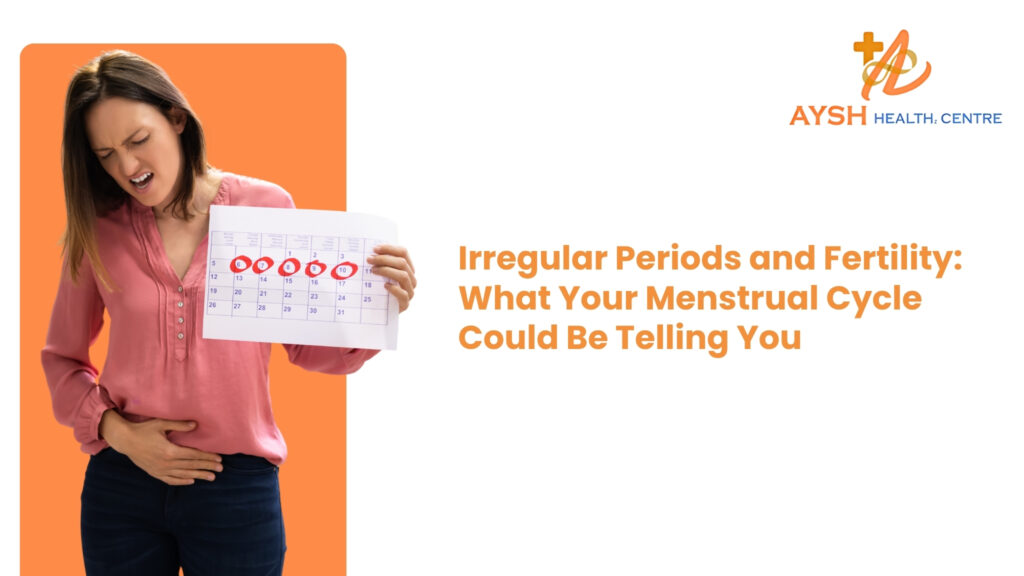
Your menstrual cycle can provide valuable information about your reproductive health. While occasional changes in cycle length are common, consistently irregular periods may sometimes indicate an underlying hormonal or gynecological condition that can also affect fertility.
For women trying to conceive, understanding what irregular periods may mean, when they require medical attention, and how they can affect ovulation is an important part of fertility care in Bangalore.
At Aysh Healthcare, Dr. Veena H has more than 22 years of experience in gynecology and provides care related to women’s health, menstrual concerns, PCOS, pregnancy planning, and pregnancy care. (ayshhealthcare.com)
What Is an Irregular Menstrual Cycle?
A menstrual cycle is considered irregular when the timing between periods varies significantly or periods occur unusually infrequently or frequently.
Your cycle can naturally vary from month to month, and an occasional late or early period does not necessarily indicate a problem.
However, persistent irregularity may deserve evaluation, particularly if you are trying to conceive.
Irregular periods can sometimes be associated with:
- Irregular ovulation
- PCOS
- Thyroid disorders
- Changes in body weight
- Excessive exercise
- Stress
- Certain medications
- Other hormonal or reproductive conditions
The cause matters because some of these conditions can also influence fertility.
What Can Your Period Tell You About Fertility?
Your menstrual cycle can provide clues about whether ovulation is occurring regularly.
Ovulation is the process in which an ovary releases an egg. For natural conception to occur, sperm needs to meet an egg during the fertile period.
When ovulation occurs regularly, menstrual cycles are often relatively predictable.
When ovulation is irregular, periods may become unpredictable as well.
This means irregular periods don’t automatically mean infertility—but they can be a reason to investigate whether you are ovulating consistently.
Does Having Irregular Periods Mean You Cannot Get Pregnant?
No.
Many women with irregular periods can become pregnant.
The challenge is that irregular cycles can make it more difficult to predict when ovulation will occur. In some women, irregular periods may also mean that ovulation is happening less frequently.
If ovulation is occurring occasionally, there are still opportunities for natural conception.
However, if you have been trying to conceive and your periods remain irregular, speaking with a gynecologist in Bangalore can help determine whether further evaluation is appropriate.
Common Causes of Irregular Periods
There are several possible reasons why periods may become irregular.
PCOS
Polycystic ovary syndrome is one of the commonly recognized causes of irregular menstrual cycles.
PCOS can affect hormonal balance and ovulation, leading to:
- Long menstrual cycles
- Infrequent periods
- Missed periods
- Difficulty predicting ovulation
- Acne
- Excess facial or body hair
Not every woman with irregular periods has PCOS, so proper evaluation is important.
Thyroid Problems
The thyroid plays an important role in regulating several body functions, including reproductive hormones.
Both an underactive and overactive thyroid can sometimes affect menstrual cycles.
If your periods have become irregular along with symptoms such as unexplained weight changes, fatigue, or changes in heart rate, discuss them with your doctor.
Changes in Body Weight
Significant weight gain or weight loss can affect hormonal balance and menstrual regularity.
Being significantly underweight or overweight can sometimes interfere with normal ovulation.
Excessive Exercise
Very intense physical activity, particularly when combined with inadequate calorie intake, can sometimes affect menstrual cycles.
Stress
Long-term or significant stress can influence hormonal regulation and may contribute to changes in menstrual patterns.
Stress should not automatically be assumed to be the cause of persistent irregular periods, however. If irregularity continues, medical evaluation can help identify other possible factors.
Perimenopause
As women approach menopause, hormonal fluctuations can cause periods to become less predictable.
For women in their 40s, changes in menstrual patterns may sometimes be related to the transition toward menopause.
How Do Irregular Periods Affect Fertility?
Irregular periods can affect fertility primarily when they are associated with irregular ovulation.
If you don’t ovulate regularly:
- There may be fewer opportunities to conceive
- Predicting your fertile window becomes difficult
- Ovulation-tracking methods may be less reliable
- Conception may take longer
However, the impact depends on the underlying cause and how frequently ovulation occurs.
What Is Ovulation and Why Is It Important?
Ovulation occurs when an ovary releases an egg.
The egg remains available for fertilization for a limited period, while sperm can survive in the female reproductive tract for several days.
Therefore, identifying the fertile window can increase the chance of conception.
Women with regular cycles may estimate their fertile window more easily.
For women with irregular cycles, identifying ovulation can be more challenging.
Can You Track Ovulation With Irregular Periods?
You can try, but some methods may be less predictable when cycles are irregular.
Ovulation may be tracked using:
- Ovulation-prediction kits
- Menstrual-cycle tracking
- Cervical mucus changes
- Basal body temperature
- Ultrasound monitoring when medically indicated
- Hormonal testing when recommended
If you have very irregular periods, a doctor can help determine whether ovulation is occurring and whether additional testing is appropriate.
When Should Irregular Periods Be Evaluated?
You don’t necessarily need medical attention for one unusually early or late period.
However, you should consider consulting a gynecologist in Attiguppe if irregular cycles become persistent or are accompanied by other symptoms.
Consider seeking medical advice if:
- You frequently miss periods
- Your cycles are consistently very long
- Your periods are unusually frequent
- You experience very heavy bleeding
- You have severe menstrual pain
- You have symptoms of hormonal imbalance
- You are trying to conceive
- You have been diagnosed with PCOS
- You have experienced recurrent pregnancy loss
When Should You Seek a Fertility Evaluation?
If you are trying to conceive, the appropriate time to seek a fertility evaluation depends partly on your age and individual circumstances.
Generally:
Under 35: Evaluation is commonly considered after 12 months of regular, unprotected intercourse without conception.
Age 35 or older: Evaluation is generally considered after six months without conception.
Over 40: Earlier consultation may be appropriate.
However, women with significantly irregular or absent periods may benefit from evaluation sooner because irregular cycles can indicate that ovulation isn’t occurring regularly.
What Happens During an Evaluation for Irregular Periods?
Your doctor will generally begin by understanding your menstrual and medical history.
You may be asked about:
- Age when periods began
- Cycle length
- Duration of bleeding
- Amount of bleeding
- Pain
- Previous pregnancies
- Medications
- Weight changes
- Lifestyle
- Medical conditions
- Pregnancy plans
Based on your symptoms, the doctor may recommend further investigations.
What Tests Can Help Find the Cause?
There is no single test that explains every case of irregular menstruation.
Depending on your symptoms, your doctor may consider:
Blood Tests
Hormonal and other blood tests may help identify thyroid problems, hormonal imbalances, or other relevant conditions.
Pelvic Ultrasound
An ultrasound can provide information about the uterus and ovaries and may help identify conditions such as fibroids, ovarian cysts, or features associated with PCOS.
Ovulation Assessment
If fertility is a concern, your doctor may assess whether ovulation is occurring.
Additional Fertility Testing
Depending on your age and fertility history, further evaluation may include assessment of the fallopian tubes or semen analysis for the male partner.
Can PCOS Cause Irregular Periods?
Yes.
PCOS is a common cause of irregular periods and can affect ovulation.
However, irregular periods do not automatically mean that you have PCOS.
A proper diagnosis considers multiple factors, including menstrual history, symptoms, examination, and appropriate investigations.
If you have irregular periods along with acne, excess facial hair, weight-related concerns, or difficulty conceiving, discuss these symptoms with your gynecologist in Bangalore.
Can You Get Pregnant With PCOS?
Yes.
Many women with PCOS become pregnant naturally.
Some women with PCOS ovulate regularly, while others experience irregular or absent ovulation.
If ovulation is the main issue, medical management may sometimes help restore or induce ovulation.
The treatment depends on your individual circumstances.
Can Irregular Periods Affect Pregnancy Planning?
Yes.
If your periods are unpredictable, planning conception based solely on calendar dates can be difficult.
Instead of assuming that ovulation occurs on a particular day, women with irregular cycles may benefit from discussing ovulation tracking with their doctor.
A preconception consultation can also identify conditions that may need to be addressed before pregnancy.
What Lifestyle Factors Can Affect Your Menstrual Cycle?
Your menstrual cycle can be influenced by several aspects of your overall health.
Nutrition
A balanced diet supports hormonal and metabolic health.
Weight
Significant changes in weight can sometimes affect ovulation.
Physical Activity
Regular moderate exercise can support general health, while excessive exercise may affect menstruation in some women.
Sleep
Consistent, adequate sleep is important for overall wellbeing.
Stress
Managing chronic stress may support general health, although persistent menstrual irregularities should still be medically evaluated.
Can Irregular Periods Be Treated?
Treatment depends entirely on the cause.
For example, management may focus on:
- PCOS
- Thyroid disorders
- Weight-related factors
- Hormonal imbalances
- Other gynecological conditions
If pregnancy is the goal, treatment is generally planned differently from treatment intended simply to regulate periods or control symptoms.
This is why discussing your pregnancy plans with your doctor is important.
What If You Are Trying to Conceive With Irregular Periods?
If you’re trying to conceive, don’t automatically assume that you need advanced fertility treatment.
The first step is understanding whether you are ovulating and whether another factor may be affecting conception.
Your doctor may evaluate:
- Ovulation
- Ovarian function
- Uterine health
- Fallopian tubes
- Partner’s sperm health
- Age-related fertility factors
- Existing medical conditions
Once the contributing factors are understood, your doctor can discuss appropriate options.
Should Both Partners Be Evaluated for Fertility?
Yes.
Although irregular periods can suggest an ovulation-related issue, fertility involves both partners.
Male factors can also contribute to difficulty conceiving.
Depending on the situation, a fertility evaluation may include semen analysis for the male partner along with assessment of the woman.
Evaluating both partners can help avoid unnecessary delays.
What Does a Healthy Menstrual Cycle Look Like?
Menstrual cycles naturally vary among women.
Rather than focusing only on a specific “perfect” number of days, it is useful to pay attention to your personal pattern.
Track:
- First day of each period
- Number of days between periods
- Duration of bleeding
- Changes in flow
- Pain
- Spotting
- Other symptoms
Keeping a menstrual record can give your doctor useful information during a consultation.
Why Choose Dr. Veena H for Irregular Periods and Fertility Care?
If you’re looking for the best gynecologist in Bangalore for irregular periods, PCOS, fertility concerns, or pregnancy planning, experience and individualized care are important considerations.
Dr. Veena H has more than 22 years of experience in gynecology. Aysh Healthcare’s published information highlights her care related to women’s health, PCOS, menstrual problems, pregnancy planning, and pregnancy care. (ayshhealthcare.com)
A consultation can help determine whether irregular periods are simply a variation in your cycle or whether they may indicate an underlying condition requiring evaluation.
Why Choose Aysh Healthcare?
Aysh Healthcare provides gynecological and women’s healthcare services in Bangalore.
For women concerned about irregular periods and fertility, professional assessment can help identify potential hormonal, reproductive, or lifestyle factors that may be affecting menstrual regularity or ovulation.
Dr. Veena H’s published profile highlights more than two decades of gynecological experience and care for conditions including PCOS, menstrual concerns, and pregnancy-related needs. (ayshhealthcare.com)
Frequently Asked Questions About Irregular Periods and Fertility
Can irregular periods make it difficult to get pregnant?
They can, particularly when irregular periods are caused by irregular or absent ovulation. However, irregular periods do not automatically mean infertility.
Can I get pregnant if I have irregular periods?
Yes. Women with irregular periods can become pregnant, although identifying the fertile window may be more difficult.
What is the most common cause of irregular periods?
There are several possible causes, including PCOS, thyroid disorders, weight changes, stress, excessive exercise, certain medications, and other hormonal or reproductive conditions.
When should I see a gynecologist for irregular periods?
Consider an evaluation if irregularity persists, periods are frequently missed, bleeding is unusually heavy, you have severe pain, or you are experiencing difficulty conceiving.
Can PCOS cause irregular periods?
Yes. PCOS can interfere with ovulation and is a common cause of irregular menstrual cycles.
How do I know if I am ovulating with irregular periods?
Your doctor may recommend cycle tracking, ovulation-prediction methods, blood tests, or ultrasound monitoring depending on your situation.
How long should I try to conceive before seeking help?
Women under 35 are generally advised to consider fertility evaluation after 12 months of trying, while women 35 and older may consider evaluation after six months. Earlier assessment may be appropriate when periods are very irregular or absent.
Can irregular periods be treated?
Yes, but treatment depends on the underlying cause and whether your goal is cycle management, symptom control, or pregnancy.
Conclusion
Your menstrual cycle can provide important clues about your reproductive health. While occasional changes are common, persistent irregular periods may sometimes indicate irregular ovulation or an underlying hormonal or gynecological condition.
If you’re trying to conceive, irregular cycles can make it harder to predict ovulation and may sometimes reduce the number of opportunities for conception. Conditions such as PCOS, thyroid disorders, significant weight changes, and other hormonal factors may contribute to irregular menstruation.
The good news is that many causes of irregular periods can be evaluated and managed.
If your periods are consistently irregular, you frequently miss periods, or you are having difficulty conceiving, consider consulting an experienced gynecologist in Bangalore.
At Aysh Healthcare, Dr. Veena H brings more than 22 years of gynecological experience and provides care for women’s health, menstrual concerns, PCOS, pregnancy planning, and pregnancy-related needs. (ayshhealthcare.com)
Understanding what your menstrual cycle may be telling you is an important first step toward better reproductive health and informed fertility planning.
Aysh Healthcare
Bangalore
Website: ayshhealthcare.com