Polycystic Ovary Syndrome (PCOS) is a common hormonal condition that can affect menstrual cycles, skin health, hair growth, metabolism, and fertility. Many women experience irregular periods, acne, unwanted facial hair, or difficulty conceiving, but the symptoms can vary considerably from person to person.
With the right assessment and an individualised care plan, PCOS symptoms can often be managed effectively. If you are looking for the Best Gynecologist in Attiguppe, Bangalore for guidance on PCOS, consulting an experienced women’s health professional can help you understand your symptoms and explore suitable treatment options.
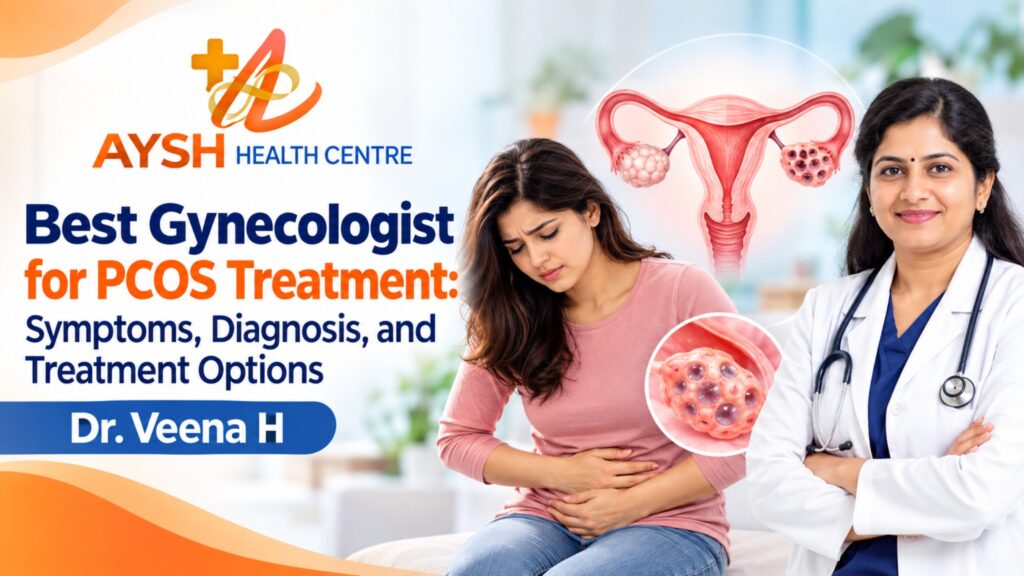
Dr. Veena H is featured by Aysh Healthcare as a gynecologist with over 22 years of experience. Her women’s healthcare services include care related to menstrual problems, pregnancy planning, and other gynaecological concerns. A consultation can help determine whether your symptoms are related to PCOS or another condition requiring attention.
What Is PCOS?
Polycystic Ovary Syndrome, commonly known as PCOS, is a hormonal and metabolic condition that can affect women during their reproductive years. It may involve irregular ovulation, higher-than-usual androgen levels, and changes in the appearance of the ovaries on ultrasound.
Despite its name, having ovarian cysts is not necessary for a PCOS diagnosis. The condition can also occur in women whose ovaries do not show a polycystic appearance on an ultrasound scan.
PCOS affects individuals differently. Some women primarily experience irregular periods, while others notice acne, excess facial hair, changes in weight, or fertility difficulties.
Seeking gynaecological consultation in Bangalore can help you understand your symptoms, receive an appropriate evaluation, and discuss a treatment plan suited to your health needs.
What Are the Common Symptoms of PCOS?
PCOS symptoms can develop gradually and may change over time. Not every woman experiences all the symptoms listed below.
1. Irregular Menstrual Periods
Irregular periods are among the common signs of PCOS. Menstrual cycles may be longer than usual, periods may occur infrequently, or menstruation may stop for several months.
Irregular cycles can indicate that ovulation is not occurring regularly. However, thyroid disorders, elevated prolactin levels, pregnancy, and other conditions can also affect menstrual patterns.
If your periods are consistently irregular or you go several months without menstruation, arrange a gynaecological assessment rather than assuming PCOS is the cause.
2. Acne and Oily Skin
Some women with PCOS develop persistent acne, particularly around the chin, jawline, chest, or back. Increased androgen activity can contribute to excess oil production and acne.
Acne alone does not confirm PCOS. A clinician will consider other symptoms, menstrual history, and examination findings before recommending investigations or treatment.
3. Excess Facial or Body Hair
Higher androgen levels may contribute to unwanted hair growth on the face, chest, abdomen, or other areas. This is known as hirsutism.
The amount of hair growth varies, and unwanted facial hair can have causes other than PCOS. A healthcare professional can assess whether hormonal evaluation is appropriate.
4. Thinning Hair on the Scalp
Some women experience hair thinning or a widening parting associated with androgen-related hair changes. Hair loss can also result from iron deficiency, thyroid disorders, nutritional issues, and other causes.
Identifying the underlying reason is important because the treatment depends on the diagnosis.
5. Weight Changes and Metabolic Concerns
Some women with PCOS experience weight gain or difficulty managing their weight. Insulin resistance may occur in PCOS and can contribute to metabolic changes.
However, PCOS can affect women of all body sizes. A normal body weight does not rule out the condition, and weight alone should not be used to diagnose it.
6. Difficulty Conceiving
PCOS can affect ovulation, which may make conception more difficult for some women. However, many women with PCOS conceive naturally, while others may benefit from ovulation-induction treatment or fertility support.
If you are planning a pregnancy and have irregular periods, discussing your reproductive goals with a gynaecologist can help you understand the available options.
What Causes PCOS?
The exact cause of PCOS is not fully understood. It is believed to involve a combination of hormonal, genetic, and metabolic factors.
Hormonal Imbalances
Some women with PCOS have elevated androgen levels, which can contribute to acne, excess facial hair, and changes in ovulation.
Insulin Resistance
Insulin helps regulate blood glucose levels. When the body becomes less responsive to insulin, it may produce more insulin to compensate. In some women, this can contribute to increased androgen production and irregular ovulation.
Insulin resistance is not present in every woman with PCOS, and its assessment should be guided by individual risk factors and clinical findings.
Genetic Factors
PCOS can occur in multiple members of the same family, suggesting that inherited factors may contribute to susceptibility. Having a family history does not mean that a person will necessarily develop the condition.
Interactions Between Metabolic and Reproductive Factors
PCOS involves more than the ovaries alone. Hormonal regulation, insulin sensitivity, and reproductive function can interact in different ways. This is one reason why symptoms and treatment needs vary between individuals.
How Is PCOS Diagnosed?
There is no single blood test that confirms every case of PCOS. Diagnosis involves assessing symptoms, medical history, examination findings, and appropriate investigations while considering other possible causes.
For adults, clinicians commonly use recognised diagnostic criteria that generally require at least two of the following, after excluding alternative explanations:
- Irregular or absent ovulation
- Clinical or biochemical evidence of increased androgen activity
- Polycystic ovarian morphology on ultrasound, or an appropriate alternative assessment in selected circumstances
Not every patient needs an ultrasound. When irregular ovulation and evidence of elevated androgen levels are both established, ultrasound may not be necessary to make the diagnosis.
1. Medical and Menstrual History
The clinician may ask about your menstrual cycle, acne, hair growth, scalp hair thinning, weight changes, medications, family history, and pregnancy plans.
2. Physical Examination
Depending on your symptoms, the examination may include an assessment of blood pressure, skin changes, hair growth, and other relevant clinical features.
3. Blood Tests
Blood tests may be recommended to assess androgen levels and investigate other conditions that can cause similar symptoms. Thyroid function and prolactin levels may be checked when clinically indicated.
Blood glucose or other metabolic assessments may also be recommended because PCOS is associated with an increased risk of certain metabolic problems.
4. Ultrasound Examination
A pelvic ultrasound may be used when it is helpful for evaluating the ovaries or investigating other pelvic concerns. However, an ultrasound showing polycystic ovarian morphology alone does not automatically mean that a woman has PCOS.
The clinician determines which tests are necessary based on the symptoms, examination, and diagnostic criteria.
What Are the Treatment Options for PCOS?
There is no single treatment that works for every woman with PCOS. Management depends on the symptoms, age, medical history, metabolic risk factors, and whether pregnancy is currently desired.
A gynecologist for PCOS treatment in Bangalore can help assess these factors and discuss a treatment plan that reflects your individual needs.
1. Lifestyle and Nutritional Support
Balanced nutrition, regular physical activity, adequate sleep, and sustainable daily habits can support overall health and metabolic function.
For women who have insulin resistance or other metabolic concerns, a clinician may recommend dietary guidance and activity goals suited to their needs.
There is no single diet that cures PCOS. A sustainable, balanced approach is generally more useful than restrictive diets or unproven supplements.
2. Treatment for Irregular Periods
When pregnancy is not currently desired, hormonal contraception or other prescribed hormonal medicines may be considered to regulate bleeding and help protect the uterine lining in women with infrequent periods.
The choice depends on medical history, risk factors, preferences, and whether contraception is also needed. Hormonal medicines should be used under medical supervision.
3. Treatment for Acne and Excess Hair Growth
Depending on the symptoms, treatment may involve combined hormonal contraception, selected anti-androgen medicines, dermatological care, or hair-removal methods.
Some medicines used for androgen-related symptoms are not suitable during pregnancy and may require effective contraception. A clinician can explain the benefits, risks, and monitoring requirements before treatment begins.
4. Medicines for Metabolic Concerns
Metformin may be considered for selected women with PCOS, particularly when metabolic concerns such as insulin resistance or elevated blood glucose are relevant.
It is not necessary for every patient, and its suitability depends on individual circumstances. Your clinician may recommend glucose testing and other assessments to guide treatment.
5. Fertility Treatment for Women Planning Pregnancy
For women who have difficulty ovulating and want to conceive, treatment may focus on improving ovulation.
Letrozole is commonly recommended as a first-line medicine for ovulation induction in many women with PCOS-related anovulatory infertility when there are no other infertility factors. Other medicines or fertility treatments may be considered according to the clinical situation.
A fertility assessment may also evaluate other factors affecting conception. Treatment should be supervised by an appropriately qualified healthcare professional.
6. Long-Term Monitoring
PCOS may be associated with an increased risk of insulin resistance, type 2 diabetes, abnormal cholesterol levels, and other metabolic concerns. Long-term monitoring can help identify problems early.
Depending on your medical history and risk factors, a clinician may recommend periodic assessment of blood pressure, blood glucose, cholesterol, menstrual health, and other relevant indicators.
Can PCOS Be Managed Without Medication?
Some women can improve certain symptoms through lifestyle measures and monitoring, while others need medication to manage irregular periods, acne, excess hair growth, or fertility concerns.
The appropriate approach depends on the symptoms and health risks involved. Lifestyle changes can support overall health, but they may not replace medical treatment when hormonal management or fertility assistance is needed.
It is also important to remember that PCOS is a long-term condition that may change over time. Treatment goals may need to be reviewed as your symptoms and reproductive plans change.
Can Women With PCOS Get Pregnant?
Yes. Many women with PCOS conceive naturally, and others can conceive with medical assistance.
The main fertility challenge in some cases is irregular or absent ovulation. When pregnancy is desired, a gynaecologist can assess ovulation, review other possible fertility factors, and discuss suitable treatment options.
If your periods are irregular and you are planning pregnancy, early consultation can help establish a plan rather than waiting until conception becomes difficult.
When Should You Consult a Gynecologist for PCOS?
Consider booking an appointment if you experience:
- Repeatedly irregular or absent periods
- Persistent acne alongside menstrual changes
- Unwanted facial or body hair
- Unexplained scalp hair thinning
- Difficulty conceiving
- Concerns about blood glucose or metabolic health
- Symptoms that are changing or becoming more troublesome
Very heavy bleeding, severe pelvic pain, fainting, or possible pregnancy accompanied by pain or bleeding requires prompt medical assessment. Do not assume these symptoms are caused by PCOS.
Why Consider Dr. Veena H at Aysh Healthcare?
Dr. Veena H is featured on Aysh Healthcare’s official website as a gynecologist with over 22 years of experience. The clinic’s published content covers women’s health concerns, menstrual issues, pregnancy planning, and related gynaecological care.
If you are looking for a gynecologist in Attiguppe, Bangalore, you can contact Aysh Healthcare to enquire about consultations for irregular periods, possible PCOS, and related hormonal concerns.
During your consultation, discuss your symptoms, menstrual history, pregnancy plans, and any previous test results. These details help the clinician decide whether PCOS investigations are needed and which management options may be suitable.
Treatment should be individualised. Not every woman with irregular periods has PCOS, and not every woman with PCOS needs the same medication or investigations.
Frequently Asked Questions About PCOS
1. What are the first signs of PCOS?
Common signs include irregular periods, acne, excess facial or body hair, scalp hair thinning, and difficulty conceiving. Some women have few noticeable symptoms, so diagnosis depends on an appropriate clinical assessment.
2. Can PCOS be cured permanently?
There is currently no single permanent cure for PCOS. However, symptoms and associated health risks can often be managed through lifestyle measures, medicines, and ongoing monitoring tailored to the individual.
3. Can I have PCOS if my ultrasound is normal?
Yes. An ultrasound is not required in every case. In adults, PCOS can be diagnosed using other recognised criteria when the appropriate features are present and alternative causes have been excluded.
4. Does every woman with PCOS need medication?
No. Treatment depends on symptoms, metabolic risk, menstrual patterns, and pregnancy plans. Some women may need lifestyle support and monitoring, while others benefit from prescribed medication.
5. Does PCOS always cause infertility?
No. Many women with PCOS conceive naturally. Some experience difficulty conceiving because ovulation is irregular, but fertility treatment can help when needed.
6. Can PCOS occur in women who are not overweight?
Yes. PCOS can affect women of all body sizes. Body weight alone cannot confirm or rule out the condition.
7. Which tests are needed to diagnose PCOS?
Testing may include a review of menstrual history, hormone blood tests, assessment for alternative conditions, and sometimes a pelvic ultrasound. Blood glucose and cholesterol assessments may also be recommended based on individual risk.
8. When should I visit a gynecologist for irregular periods?
Arrange an appointment if your periods are persistently irregular, you frequently miss periods, or you have additional symptoms such as acne, unwanted facial hair, or difficulty conceiving. A clinician can determine the cause and recommend appropriate care.
Conclusion
PCOS is a complex hormonal condition that can affect menstrual health, skin, metabolism, and fertility. Although symptoms differ from one woman to another, an appropriate diagnosis and individualised treatment plan can help manage symptoms and reduce associated health risks.
If you experience irregular periods, persistent acne, excess facial hair, or difficulty conceiving, consider consulting a qualified gynaecologist. Early evaluation can help distinguish PCOS from other conditions and guide appropriate treatment.
For women seeking PCOS consultation in Bangalore, Dr. Veena H at Aysh Healthcare can be contacted to enquire about women’s health appointments and assessment options.