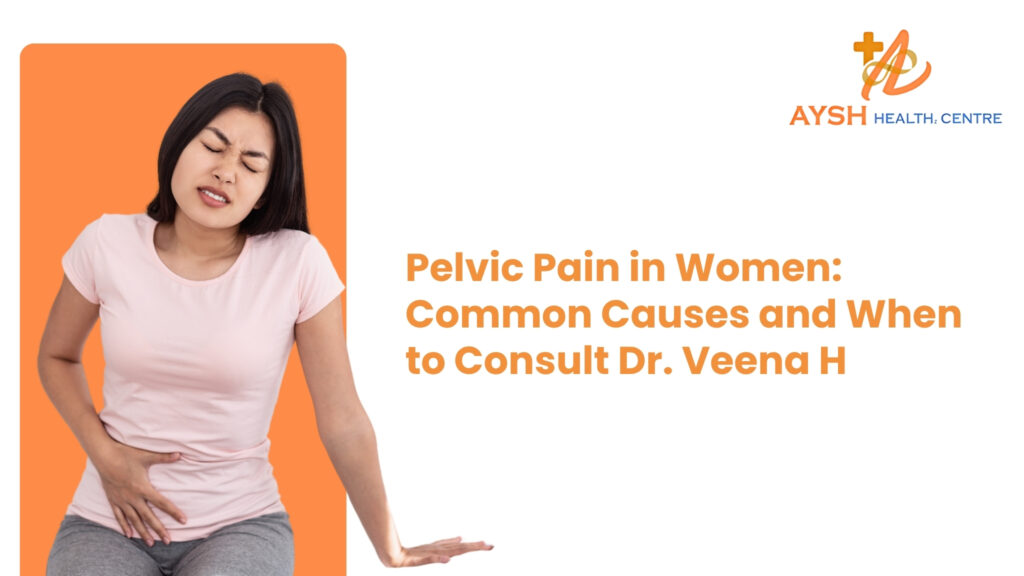
Pelvic pain is a common concern among women, but it should not always be dismissed as a normal part of menstruation. Pain in the lower abdomen or pelvic region can have many possible causes, ranging from menstrual cramps and ovulation to conditions involving the uterus, ovaries, urinary system or digestive tract.
For women experiencing persistent, recurrent or unexplained pelvic pain, a consultation with an experienced gynecologist in Attiguppe can help identify the underlying cause and determine whether further evaluation or treatment is needed.
Dr. Veena H, featured by Aysh Healthcare as a gynecologist with 22+ years of experience, provides women’s healthcare including gynecological care, menstrual concerns, PCOS management, pregnancy care and other women’s health needs.
What Is Pelvic Pain in Women?
Pelvic pain refers to discomfort or pain felt in the lower abdomen, pelvis or areas around the reproductive organs.
It can be:
- Sudden or gradual
- Mild or severe
- Constant or intermittent
- Related to the menstrual cycle
- Triggered by movement or sexual activity
- Associated with urinary or bowel symptoms
The location and pattern of pain can provide useful information, but symptoms alone cannot establish a diagnosis.
If you are experiencing recurring pelvic discomfort, consulting a women’s health specialist in Attiguppe can help determine whether the pain requires further evaluation.
Common Causes of Pelvic Pain in Women
Pelvic pain can have many causes. Some are temporary, while others may require medical treatment.
1. Menstrual Cramps
Menstrual cramps, or dysmenorrhea, are one of the common causes of pelvic pain.
They typically occur around the beginning of a menstrual period and may be accompanied by:
- Lower abdominal cramping
- Lower back pain
- Fatigue
- Nausea
- Headache
- Changes in bowel movements
Mild menstrual cramps may be manageable with appropriate self-care, but severe or progressively worsening period pain should be discussed with a gynecologist.
2. Ovulation Pain
Some women experience temporary pelvic discomfort around the middle of their menstrual cycle.
Ovulation pain may occur on one side of the lower abdomen and can last from a short period to a day or two.
However, new, severe or persistent mid-cycle pain should not automatically be assumed to be ovulation pain.
A gynecologist in Attiguppe can help determine whether further evaluation is appropriate.
3. Polycystic Ovary Syndrome (PCOS)
PCOS is a common hormonal condition that can affect menstrual cycles, ovulation and reproductive health.
Women with PCOS may experience:
- Irregular periods
- Changes in menstrual flow
- Difficulty with ovulation
- Acne
- Excess hair growth
- Weight-related concerns
- Fertility difficulties
Pelvic discomfort is not necessarily present in every woman with PCOS, so unexplained pelvic pain should not automatically be attributed to PCOS.
Aysh Healthcare features Dr. Veena H’s women’s healthcare expertise, including management of PCOS and menstrual concerns.
4. Endometriosis
Endometriosis occurs when tissue similar to the lining of the uterus grows outside the uterus.
It may be associated with:
- Severe period pain
- Chronic pelvic pain
- Pain during sexual intercourse
- Painful bowel movements during menstruation
- Painful urination during menstruation
- Fertility difficulties
The severity of symptoms can vary significantly between women.
If period pain interferes with work, education, sleep or daily activities, discussing the symptoms with a gynecologist for women’s health is appropriate.
5. Uterine Fibroids
Fibroids are non-cancerous growths that can develop in or around the uterus.
Depending on their size and location, fibroids may be associated with:
- Heavy menstrual bleeding
- Pelvic pressure
- Pelvic discomfort
- Frequent urination
- Lower back discomfort
- Changes in menstrual patterns
Not every woman with fibroids experiences symptoms, and treatment depends on the individual situation.
6. Ovarian Cysts
Ovarian cysts are fluid-filled sacs or other cystic structures that can develop on the ovaries.
Many ovarian cysts cause no symptoms and may resolve on their own. Others can cause:
- One-sided pelvic pain
- Pressure or fullness
- Bloating
- Pain during certain activities
- Changes in menstruation
Sudden severe pelvic pain, particularly when accompanied by nausea or vomiting, requires prompt medical assessment because certain ovarian conditions can become urgent.
7. Pelvic Infections
Pelvic pain can sometimes be associated with infections affecting the female reproductive system.
Possible accompanying symptoms include:
- Abnormal vaginal discharge
- Fever
- Pain during intercourse
- Pain while urinating
- Abnormal bleeding
- Lower abdominal tenderness
These symptoms should be evaluated by a healthcare professional rather than self-treated.
8. Urinary Tract Problems
Pelvic discomfort can sometimes originate from the urinary system.
A urinary tract infection, for example, may cause:
- Burning while urinating
- Frequent urination
- Urgency
- Lower abdominal discomfort
- Blood in urine in some cases
If urinary symptoms occur together with pelvic pain, your doctor may recommend appropriate urine testing or other investigations.
9. Digestive Problems
Not every type of pelvic or lower abdominal pain is related to the reproductive organs.
Constipation, irritable bowel syndrome and other gastrointestinal conditions can produce discomfort in the lower abdomen or pelvic region.
This is why a detailed medical history is important when evaluating pelvic pain.
10. Pregnancy-Related Causes
Pelvic or lower abdominal pain during pregnancy can have several causes, some of which may be normal while others require urgent evaluation.
Pregnant women should seek medical advice for significant or persistent pelvic pain, particularly if it occurs with:
- Vaginal bleeding
- Severe abdominal pain
- Dizziness or fainting
- Fever
- Fluid leakage
- Shoulder pain
- Contractions
Pregnancy care is one of the women’s healthcare areas associated with Dr. Veena H at Aysh Healthcare.
When Should You Consult a Gynecologist for Pelvic Pain?
You should consider scheduling a gynecology consultation in Attiguppe when pelvic pain:
- Keeps returning
- Is becoming more severe
- Interferes with daily activities
- Occurs outside your usual menstrual pattern
- Is associated with unusually heavy bleeding
- Occurs during or after sexual intercourse
- Is accompanied by abnormal vaginal discharge
- Occurs with urinary symptoms
- Is associated with fertility concerns
- Continues despite usual menstrual pain measures
Keeping track of when the pain occurs can help your doctor understand its relationship to your menstrual cycle and other symptoms.
When Is Pelvic Pain an Emergency?
Some types of pelvic pain require immediate medical evaluation.
Seek urgent medical care if you experience sudden or severe pelvic or abdominal pain, particularly if it is accompanied by:
- Fainting or severe dizziness
- Heavy vaginal bleeding
- Fever
- Persistent vomiting
- Severe weakness
- Possible pregnancy
- Shoulder-tip pain
- Significant abdominal swelling
Severe sudden pain should not be assumed to be ordinary menstrual cramps.
How Is Pelvic Pain Diagnosed?
A gynecological evaluation usually begins with a detailed discussion of your symptoms.
Your doctor may ask about:
- When the pain started
- Exact location of the pain
- Pain intensity
- Menstrual cycle
- Bleeding pattern
- Pregnancy possibility
- Sexual health
- Urinary symptoms
- Bowel symptoms
- Previous gynecological conditions
- Previous surgeries or treatments
Depending on the suspected cause, further investigations may include blood tests, urine tests, pregnancy testing, pelvic examination or ultrasound.
Additional investigations may be recommended depending on the findings.
Why Keeping a Menstrual and Pain Diary Can Help
Before your appointment, it can be useful to record:
Date: When the pain occurred
Location: Right side, left side, center or general pelvic region
Duration: How long the pain lasted
Severity: Mild, moderate or severe
Menstrual timing: Whether it occurred before, during or after your period
Associated symptoms: Bleeding, discharge, nausea, urinary symptoms or bowel changes
This information can help your gynecologist identify patterns and decide what evaluation may be appropriate.
Pelvic Pain and Menstrual Problems
Pelvic pain can sometimes occur alongside menstrual abnormalities.
Pay attention to changes such as:
- Periods becoming unusually heavy
- Periods becoming very painful
- Bleeding between periods
- Irregular periods
- Periods becoming unusually frequent
- Periods becoming unusually infrequent
- New menstrual symptoms after previously normal cycles
Dr. Veena H’s Aysh Healthcare profile and related content specifically address women’s health concerns including menstrual issues and PCOS management.
Pelvic Pain and Fertility
Some conditions associated with pelvic pain can also affect fertility.
For example, endometriosis, certain ovarian conditions, fibroids and pelvic infections can have implications for reproductive health.
However, experiencing pelvic pain does not automatically mean that a woman will have fertility problems.
If pelvic pain occurs alongside difficulty conceiving, a consultation with a gynecologist for fertility and women’s health can help determine whether further evaluation is appropriate.
Can Pelvic Pain Be Prevented?
Not every cause of pelvic pain can be prevented.
However, maintaining good women’s health practices can help identify problems early.
Attend Regular Gynecological Checkups
Routine consultations can help address menstrual, reproductive and other gynecological concerns.
Don’t Ignore Persistent Symptoms
Recurring pain deserves evaluation rather than repeated self-treatment.
Track Menstrual Changes
Recording changes in periods can help identify patterns.
Practice Appropriate Hygiene
Good personal hygiene can support overall reproductive and urinary health.
Seek Care for Unusual Symptoms
Abnormal bleeding, unusual discharge, severe pain or urinary symptoms should be discussed with a healthcare professional.
Treatment Depends on the Underlying Cause
There is no single treatment for pelvic pain because pelvic pain is a symptom rather than one specific disease.
Depending on the diagnosis, management may involve:
- Lifestyle measures
- Medication
- Hormonal treatment
- Treatment of infections
- Management of menstrual disorders
- Treatment for endometriosis
- Management of ovarian or uterine conditions
- Surgical treatment when clinically indicated
The appropriate treatment should be determined after a medical evaluation.
Why Consult Dr. Veena H for Women’s Health?
Choosing an experienced gynecologist in Attiguppe, Bangalore can be important when symptoms such as pelvic pain are persistent or unexplained.
Aysh Healthcare’s content identifies Dr. Veena H as a gynecologist with 22+ years of experience and discusses her women’s healthcare expertise across areas including PCOS, menstrual concerns, pregnancy care and normal delivery.
A personalized consultation can help evaluate your symptoms, identify potential causes and determine whether additional investigations are required.
Frequently Asked Questions
Is pelvic pain normal during periods?
Mild menstrual cramps can be common. However, severe, worsening or disabling pelvic pain should be evaluated by a gynecologist.
What is the most common cause of pelvic pain in women?
Menstrual cramps are a common cause, but pelvic pain can also result from conditions involving the reproductive, urinary or digestive systems. The cause cannot be determined from pain alone.
Can PCOS cause pelvic pain?
PCOS primarily affects hormonal function and ovulation and does not necessarily cause pelvic pain. If you have PCOS and persistent pelvic pain, another cause may need to be evaluated.
Can ovarian cysts cause pelvic pain?
Yes. Some ovarian cysts can cause pelvic discomfort, pressure or one-sided pain, although many cysts produce no symptoms.
When should I see a gynecologist for pelvic pain?
Consult a gynecologist if pain is persistent, recurrent, worsening, unusually severe or associated with abnormal bleeding, discharge, urinary symptoms, fertility concerns or other changes.
Can pelvic pain be a sign of pregnancy?
Pelvic discomfort can occur during pregnancy, but pain can also indicate a condition requiring medical assessment. If pregnancy is possible and you experience significant pain or bleeding, seek medical attention promptly.
Does pelvic pain always mean a serious problem?
No. Pelvic pain can have relatively common causes, including menstrual cramps. However, persistent or unexplained pain should be assessed rather than assumed to be harmless.
Conclusion
Pelvic pain in women can have many possible causes, from menstrual cramps and ovulation to endometriosis, fibroids, ovarian cysts, infections and urinary or digestive conditions. Because the same symptom can occur with different conditions, identifying the underlying cause is more important than simply treating the pain.
If you are experiencing persistent, recurrent or unexplained pelvic pain, consulting a gynecologist in Attiguppe can help you understand the possible causes and determine whether further evaluation is needed.
With more than 22 years of experience highlighted by Aysh Healthcare, Dr. Veena H provides women’s healthcare covering concerns such as menstrual problems, PCOS and pregnancy care.