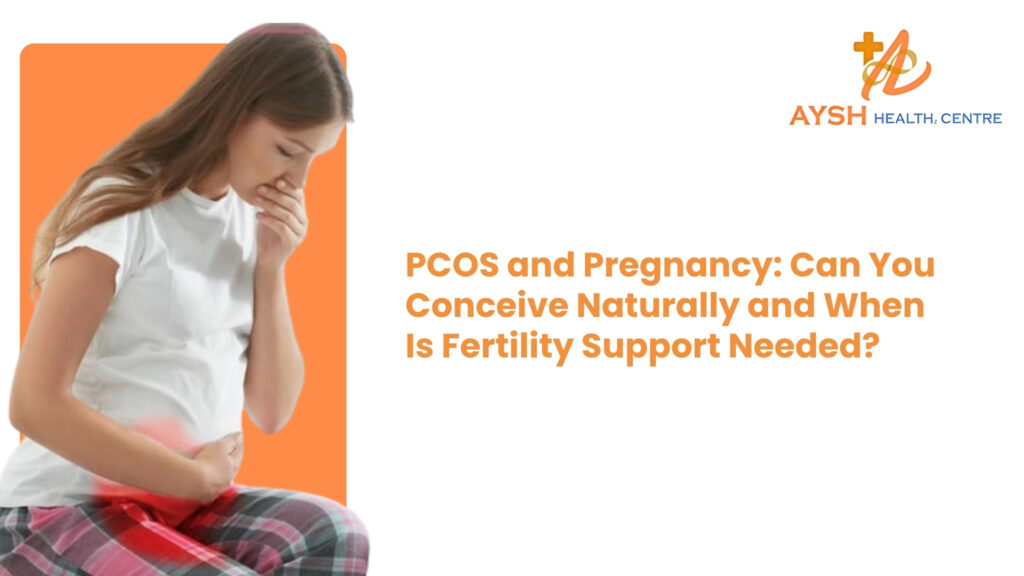
Polycystic ovary syndrome, commonly known as PCOS, is one of the most common hormonal conditions affecting women during their reproductive years. For women with PCOS who are planning a family, one of the biggest questions is often: Can I get pregnant naturally with PCOS?
The answer is yes. Having PCOS does not mean that natural pregnancy is impossible. However, PCOS can affect ovulation, making conception less predictable or sometimes more difficult.
Understanding how PCOS affects fertility, when to seek medical advice, and how pregnancy can be planned with appropriate care can help women approach conception with greater confidence.
If you are looking for a gynecologist in Bangalore for PCOS management or pregnancy planning, Dr. Veena H at Aysh Healthcare provides gynecological and pregnancy-related care. Her profile highlights more than 22 years of experience and expertise in women’s health, PCOS, menstrual concerns, and pregnancy care.
What Is PCOS?
PCOS, or polycystic ovary syndrome, is a hormonal and metabolic condition that can affect ovulation and menstrual cycles.
Women with PCOS may experience:
- Irregular or infrequent periods
- Irregular ovulation
- Acne
- Increased facial or body hair
- Weight gain or difficulty losing weight
- Insulin resistance
- Difficulties with conception
Not every woman with PCOS experiences all of these symptoms. PCOS can look different from one person to another.
Can You Get Pregnant Naturally With PCOS?
Yes, many women with PCOS can conceive naturally.
The main fertility challenge associated with PCOS is often irregular or absent ovulation. If ovulation doesn’t occur regularly, it becomes harder to predict the fertile window and there may be fewer opportunities for conception.
However, PCOS does not automatically mean infertility.
Some women with PCOS ovulate regularly enough to conceive without fertility treatment, while others may need medical support to regulate ovulation.
This is why an individualized PCOS treatment in Bangalore plan can be useful when you’re preparing for pregnancy.
How Does PCOS Affect Fertility?
Ovulation occurs when an ovary releases an egg that can potentially be fertilized by sperm.
With PCOS, hormonal imbalances can interfere with the normal development and release of an egg.
This can result in:
- Infrequent ovulation
- Irregular menstrual cycles
- Longer menstrual cycles
- Difficulty identifying the fertile window
- Reduced opportunities for conception
The important point is that the fertility impact varies. Some women with PCOS ovulate regularly, while others may ovulate only occasionally.
Does Having Irregular Periods Mean You Cannot Get Pregnant?
No.
Irregular periods can indicate irregular ovulation, but they do not mean pregnancy is impossible.
However, if your periods are very irregular, it may be difficult to determine when ovulation occurs. A gynecologist in Attiguppe can assess your menstrual history and determine whether additional evaluation or management may be appropriate.
What Are the Signs of PCOS That May Affect Pregnancy?
Some symptoms may suggest that PCOS is affecting ovulation.
These can include:
Irregular Periods
Periods occurring at unpredictable intervals can indicate irregular ovulation.
Long Menstrual Cycles
Very long cycles may mean that ovulation is occurring less frequently.
Missed Periods
Repeatedly missing periods may require evaluation.
Difficulty Conceiving
If pregnancy isn’t occurring despite regular attempts, an evaluation can help identify whether irregular ovulation or another fertility factor is involved.
Symptoms of Hormonal Imbalance
Acne, excessive hair growth, and other hormonal symptoms can occur in some women with PCOS.
How Can You Know If You Are Ovulating?
Women with regular cycles may sometimes estimate ovulation based on their menstrual pattern. However, this can be more difficult when PCOS causes irregular cycles.
Depending on your situation, your doctor may assess ovulation through:
- Menstrual-cycle history
- Ovulation-prediction methods
- Blood tests
- Ultrasound monitoring
- Other investigations when appropriate
Your doctor can recommend the most suitable method based on your individual circumstances.
Can Lifestyle Changes Help With PCOS and Pregnancy?
Lifestyle management can be an important part of PCOS care, particularly for women who have metabolic concerns or are overweight.
Healthy lifestyle habits may include:
Balanced Nutrition
A nutritious diet containing vegetables, fruits, whole grains, protein, and healthy fats can support overall health.
Regular Physical Activity
Regular exercise can support cardiovascular and metabolic health and may be beneficial for women with PCOS.
Healthy Weight Management
For women who are overweight, even modest weight management may improve metabolic health and, in some cases, ovulation.
Good Sleep
Adequate sleep and a consistent sleep routine support overall health.
Stress Management
Managing stress can support general wellbeing while trying to conceive.
Lifestyle changes should complement—not replace—medical evaluation when fertility difficulties are present.
When Should You See a Doctor for PCOS and Pregnancy?
If you have PCOS and are planning pregnancy, a preconception consultation can be useful.
You may especially want to seek medical advice if:
- Your periods are very irregular
- You rarely or never have periods
- You have been trying to conceive without success
- You have other medical conditions
- You take medications that need to be reviewed before pregnancy
- You have previously experienced pregnancy loss
- You have concerns about ovulation
A consultation doesn’t necessarily mean you need fertility treatment. It can simply help you understand your reproductive health before conception.
When Is Fertility Support Needed With PCOS?
Not every woman with PCOS needs fertility treatment.
Fertility support may be considered when:
- Ovulation is not occurring regularly
- Pregnancy hasn’t occurred after an appropriate period of trying
- There are additional fertility factors
- Age or other medical circumstances make timely evaluation important
- Previous fertility treatment has been unsuccessful
Your doctor may first identify the reason for difficulty conceiving before recommending a specific treatment.
How Long Should You Try Before Seeking Fertility Evaluation?
The appropriate timeframe depends on age and individual circumstances.
Generally, women under 35 may be advised to consider an infertility evaluation after 12 months of regular, unprotected intercourse without conception.
Women aged 35 or older may be advised to seek evaluation after approximately six months.
However, women with irregular or absent ovulation may benefit from an earlier consultation rather than simply waiting for the full timeframe.
If you already know that you have PCOS and have significant cycle irregularity, discussing your pregnancy plans with a gynecologist can help determine the right approach.
Does PCOS Mean You Will Need IVF?
No.
Having PCOS does not automatically mean you need IVF.
Many women with PCOS conceive naturally or with relatively simple fertility support.
Depending on the cause of difficulty conceiving, treatment may focus on helping restore or induce regular ovulation before considering more advanced fertility procedures.
The appropriate approach depends on:
- Your age
- Ovulation pattern
- Duration of trying
- Partner’s fertility
- Fallopian-tube health
- Uterine health
- Other medical conditions
What Fertility Tests May Be Recommended?
A fertility evaluation is not necessarily limited to testing the woman.
Your doctor may consider:
Hormonal Evaluation
Certain blood tests may help evaluate reproductive hormones and other relevant health factors.
Pelvic Ultrasound
Ultrasound can help assess the uterus and ovaries and may provide information relevant to PCOS and fertility.
Ovulation Assessment
Your doctor may determine whether and when ovulation is occurring.
Tubal Evaluation
If appropriate, testing may be recommended to assess whether the fallopian tubes are open.
Semen Analysis
Male-factor infertility can contribute to difficulty conceiving, so evaluating the male partner may also be important.
Why Should Both Partners Be Evaluated?
Difficulty conceiving can result from female factors, male factors, a combination of factors, or sometimes no clearly identifiable cause.
Therefore, fertility assessment should not automatically focus only on PCOS.
A woman may have PCOS and also have another fertility factor—or her partner may have a separate fertility issue.
Looking at both partners can provide a more complete picture.
Can PCOS Affect Pregnancy After You Conceive?
PCOS doesn’t end once pregnancy occurs.
Women with PCOS may have an increased risk of certain pregnancy complications, particularly when metabolic issues are present.
Depending on your individual health, your doctor may monitor:
- Blood sugar
- Blood pressure
- Weight
- Pregnancy development
- Other pregnancy-related factors
This doesn’t mean that women with PCOS cannot have healthy pregnancies. It means appropriate prenatal care and monitoring can be important.
Aysh Healthcare’s published pregnancy content emphasizes ongoing pregnancy care and monitoring, including guidance from Dr. Veena H on pregnancy health and conditions such as diabetes during pregnancy.
Can PCOS Be Cured Before Pregnancy?
PCOS is generally considered a long-term condition rather than something that can simply be permanently “cured.”
However, symptoms and metabolic or reproductive effects can often be managed.
Treatment may focus on:
- Regulating menstrual cycles
- Supporting healthy ovulation
- Managing weight and metabolic health
- Addressing hormonal symptoms
- Supporting fertility when pregnancy is desired
The treatment approach changes depending on whether your current goal is symptom management, pregnancy prevention, or conception.
What Should You Do Before Trying to Conceive With PCOS?
A preconception consultation can be valuable.
Your doctor may review:
- Menstrual cycles
- Existing PCOS symptoms
- Current medications
- Weight and metabolic health
- Blood pressure
- Previous pregnancies
- Medical conditions
- Pregnancy goals
You may also be advised about folic acid, nutrition, exercise, and other preconception measures.
Is Folic Acid Important for Women With PCOS?
Yes. Women planning pregnancy are generally advised to take folic acid before conception to help reduce the risk of neural tube defects.
The appropriate dose can vary depending on individual circumstances.
Speak with your doctor about the right prenatal supplement and dosage for you rather than selecting a dose based solely on online information.
Can PCOS Cause Infertility?
PCOS can contribute to infertility, particularly when it causes irregular or absent ovulation.
However, PCOS is not synonymous with infertility.
Many women with PCOS are able to conceive naturally, while others may require medical assistance to improve ovulation or address other fertility factors.
The key is understanding what is happening in your individual case.
Why Choose Dr. Veena H for PCOS and Pregnancy Care?
If you’re searching for the best gynecologist in Bangalore for PCOS management, pregnancy planning, or women’s reproductive health, experience and individualized care are important considerations.
Dr. Veena H has more than 22 years of experience in gynecology. Aysh Healthcare’s published information highlights her work in pregnancy care, PCOS, menstrual concerns, and women’s health.
A consultation with an experienced gynecologist can help you understand whether your PCOS is affecting ovulation, whether fertility evaluation is appropriate, and what steps may be useful when planning pregnancy.
Why Choose Aysh Healthcare?
Aysh Healthcare provides women’s healthcare and gynecological services in Bangalore. The clinic’s content includes pregnancy planning and pregnancy-care guidance from Dr. Veena H, whose profile highlights more than two decades of gynecological experience.
For women with PCOS who want to conceive, personalized care can help address both reproductive and general health factors before and during pregnancy.
Frequently Asked Questions About PCOS and Pregnancy
Can I get pregnant naturally if I have PCOS?
Yes. Many women with PCOS conceive naturally. The main challenge for some women is irregular ovulation, but PCOS does not automatically mean infertility.
How long does it take to get pregnant with PCOS?
There is no fixed timeframe. Some women conceive quickly, while others may take longer because of irregular ovulation or other fertility factors.
Does PCOS prevent ovulation?
PCOS can cause irregular or absent ovulation in some women, but not every woman with PCOS has an ovulation problem.
Do I need fertility treatment if I have PCOS?
Not necessarily. Fertility support is considered when ovulation is irregular, pregnancy doesn’t occur after an appropriate period of trying, or other fertility factors are identified.
Can PCOS affect pregnancy?
PCOS can be associated with an increased risk of certain pregnancy complications. Appropriate prenatal care and monitoring can help manage individual risks.
Should I see a gynecologist before trying to conceive with PCOS?
A preconception consultation can be useful, especially if your periods are irregular, you take regular medication, or you have other health conditions.
Can lifestyle changes improve fertility with PCOS?
Healthy nutrition, regular physical activity, appropriate weight management, good sleep, and management of metabolic health can support overall health and may improve reproductive function in some women.
Does PCOS mean I will need IVF?
No. IVF is not automatically required for women with PCOS. The appropriate fertility approach depends on the individual’s age, ovulation, reproductive health, partner factors, and other circumstances.
Conclusion
PCOS does not mean you cannot become pregnant naturally. Many women with PCOS conceive without advanced fertility treatment, while others may need medical support because irregular ovulation makes conception more difficult.
The most important step is to understand how PCOS is affecting your individual reproductive health. If your periods are irregular, you are not sure whether you are ovulating, or pregnancy has not occurred after an appropriate period of trying, a consultation with a qualified gynecologist in Bangalore can help identify the next steps.
With appropriate preconception care, lifestyle management, ovulation assessment, and fertility support when needed, women with PCOS can receive personalized guidance throughout their pregnancy journey.
At Aysh Healthcare, Dr. Veena H brings more than 22 years of gynecological experience and provides women’s healthcare, pregnancy care, and guidance for conditions including PCOS.
If you have PCOS and are planning pregnancy, consider consulting Dr. Veena H at Aysh Healthcare to discuss your reproductive health and pregnancy-planning needs.
Aysh Healthcare
Bangalore
Website: ayshhealthcare.com
SEO Metadata