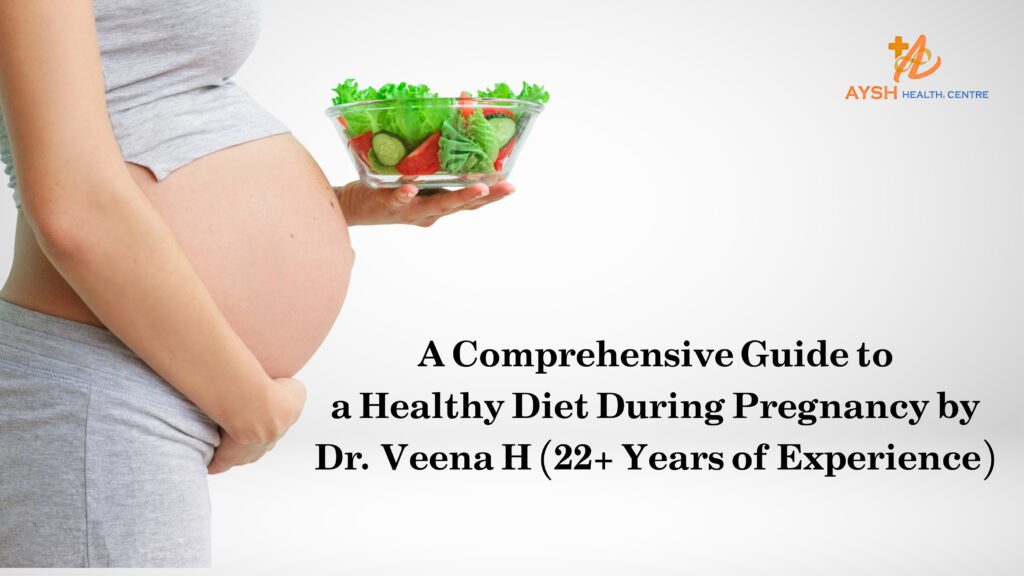
Pregnancy is a crucial phase where nutrition plays a vital role in the health of both mother and baby. A balanced and well-planned diet supports fetal growth, strengthens maternal health, reduces complications, and prepares the body for delivery and breastfeeding. Proper dietary guidance during pregnancy ensures optimal development of the baby while maintaining the mother’s energy, immunity, and emotional well-being.
With over 22 years of experience in obstetrics and maternal care, Dr. Veena H emphasizes the importance of personalized nutrition plans tailored to each trimester and health condition.
Why a Healthy Pregnancy Diet Is Important
During pregnancy, the body requires extra nutrients to support:
-
Fetal growth and brain development
-
Placenta formation
-
Increased blood supply
-
Hormonal balance
-
Maternal strength and immunity
A healthy diet reduces the risk of complications such as anemia, gestational diabetes, pre-eclampsia, and low birth weight.
Key Nutrients Required During Pregnancy
1. Folic Acid
Essential for the baby’s brain and spinal cord development, especially in the first trimester.
Sources:
-
Green leafy vegetables
-
Citrus fruits
-
Beans
-
Fortified cereals
2. Iron
Supports hemoglobin production and prevents anemia.
Sources:
-
Spinach
-
Lentils
-
Dates
-
Red meat
-
Iron-fortified foods
3. Calcium
Helps build strong bones and teeth for the baby and maintains maternal bone strength.
Sources:
-
Milk and dairy products
-
Almonds
-
Ragi
-
Paneer
-
Green vegetables
4. Protein
Supports tissue growth and fetal development.
Sources:
-
Eggs
-
Pulses
-
Lean meat
-
Nuts and seeds
-
Dairy products
5. DHA & Omega-3 Fatty Acids
Important for brain and eye development.
Sources:
-
Walnuts
-
Flaxseeds
-
Fish (low-mercury varieties)
6. Fiber
Prevents constipation and supports digestion.
Sources:
-
Whole grains
-
Fruits
-
Vegetables
-
Oats
7. Fluids
Hydration supports amniotic fluid levels and blood circulation.
Recommended intake:
-
2.5–3 liters of water daily
-
Coconut water
-
Fresh juices
-
Soups
Trimester-Wise Diet Plan
First Trimester (0–12 Weeks)
Focus on folic acid and light, frequent meals.
Tips:
-
Eat small portions frequently
-
Manage nausea with dry snacks
-
Include fruits and simple carbohydrates
Second Trimester (13–26 Weeks)
Energy and protein requirements increase.
Include:
-
Protein-rich foods
-
Calcium-rich meals
-
Iron supplements (if prescribed)
-
Fresh vegetables
Third Trimester (27–40 Weeks)
Focus on baby’s growth and maternal stamina.
Recommended foods:
-
Iron-rich foods
-
Complex carbohydrates
-
Healthy fats
-
Hydrating fluids
Sample Daily Pregnancy Diet Plan
Morning:
Warm water + soaked almonds
Breakfast:
Vegetable upma / oats / eggs + milk
Mid-morning:
Fruit bowl or coconut water
Lunch:
Rice/roti + dal + green vegetables + curd
Evening:
Nuts / sprouts / smoothie
Dinner:
Light meal with protein and vegetables
Before bed:
Glass of warm milk
Foods to Avoid During Pregnancy
-
Raw or undercooked meat
-
Unpasteurized dairy products
-
Excess caffeine
-
Processed and junk foods
-
Alcohol and smoking
-
High-mercury fish
These may harm fetal development and increase complications.
Managing Common Pregnancy Nutrition Concerns
Morning Sickness
-
Eat dry snacks like crackers
-
Avoid oily and spicy foods
-
Drink ginger tea
Constipation
-
Increase fiber intake
-
Stay hydrated
-
Include fruits like papaya and prunes
Heartburn
-
Avoid heavy meals
-
Eat smaller portions
-
Stay upright after eating
Gestational Diabetes
-
Limit sugar intake
-
Choose whole grains
-
Monitor carbohydrate consumption
Importance of Supplements
Even with a healthy diet, supplements are often required:
-
Folic acid tablets
-
Iron supplements
-
Calcium tablets
-
Vitamin D
These should only be taken under medical supervision.
Role of a Specialist in Pregnancy Nutrition
Dr. Veena H recommends:
-
Individualized diet plans
-
Monitoring weight gain
-
Managing medical conditions
-
Nutritional counseling
-
Regular prenatal evaluations
Professional guidance ensures balanced nutrition and reduces risks.
Healthy Weight Gain During Pregnancy
Average recommended weight gain:
-
Underweight women: 12–18 kg
-
Normal weight: 11–16 kg
-
Overweight: 7–11 kg
Sudden or inadequate weight changes require medical attention.
Lifestyle Tips Along With Diet
-
Light exercise and walking
-
Prenatal yoga
-
Adequate sleep
-
Stress management
-
Regular doctor visits
Nutrition combined with lifestyle care ensures a healthy pregnancy.
Benefits of a Balanced Pregnancy Diet
-
Healthy fetal development
-
Reduced risk of complications
-
Strong immunity
-
Better energy levels
-
Smooth labor and recovery
-
Healthy birth weight baby
When to Consult a Doctor
Seek medical advice if:
-
Persistent vomiting
-
Sudden weight changes
-
High blood sugar levels
-
Loss of appetite
-
Nutritional deficiencies
Early intervention prevents complications.
Conclusion
A healthy pregnancy diet is one of the most powerful tools to ensure safe motherhood and a healthy baby. Balanced nutrition, proper supplementation, and medical guidance help prevent complications and support overall well-being throughout pregnancy.
With more than 22 years of experience, Dr. Veena H provides expert nutritional guidance tailored to every stage of pregnancy, ensuring mothers receive the right care, support, and dietary planning. By following a structured diet and maintaining a healthy lifestyle, expectant mothers can enjoy a smooth pregnancy journey and welcome their baby with confidence and good health.