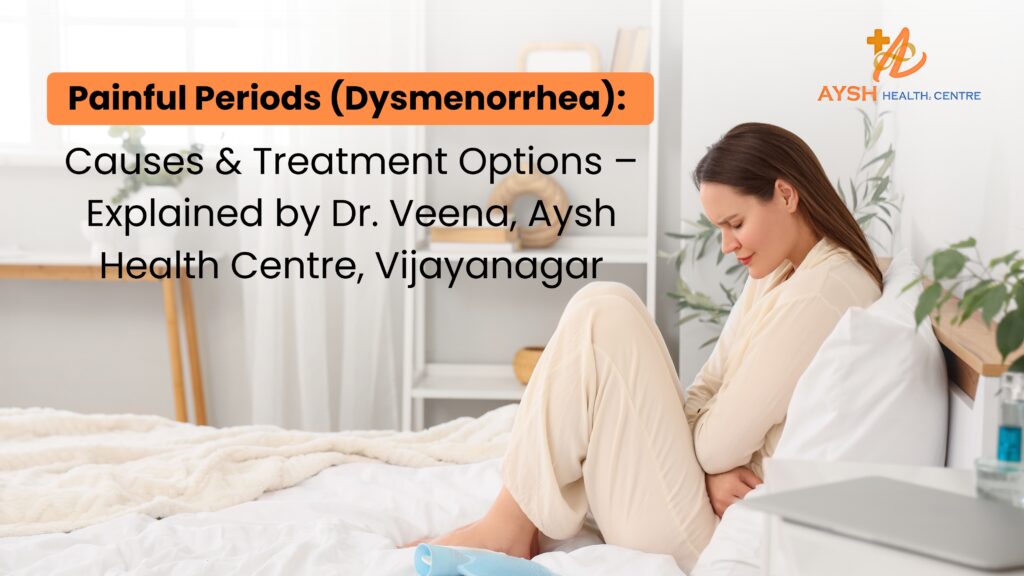
Menstruation is a natural monthly process, but for many women, it comes with significant pain and discomfort. While mild cramping is normal, debilitating pain that affects daily activities should not be ignored. This condition is medically known as dysmenorrhea, and it affects nearly 50–90% of women at some point in their life.
With more than 22 years of experience, Dr. Veena from Aysh Health Centre, Vijayanagar, provides expert guidance on understanding why period pain occurs, when to worry, and what treatment options can help women live pain-free.
What Is Dysmenorrhea?
Dysmenorrhea refers to painful menstrual cramps that occur just before or during menstrual bleeding. The pain is usually felt in the:
- Lower abdomen
- Lower back
- Pelvic area
- Thighs
For some women, the pain may be accompanied by nausea, vomiting, headaches, or dizziness.
There are two types of dysmenorrhea: primary dysmenorrhea and secondary dysmenorrhea.
Types of Dysmenorrhea
1. Primary Dysmenorrhea
This is the most common type and typically begins during adolescence.
Cause:
Strong uterine contractions triggered by hormonal substances called prostaglandins.
Symptoms:
- Cramping a day before or at the start of periods
- Pain lasting 1–3 days
- Back pain
- Fatigue
- Mild nausea
Women with high prostaglandin levels tend to experience more severe pain.
2. Secondary Dysmenorrhea
This type develops later in life and is usually linked to an underlying medical condition.
Causes include:
a) Endometriosis
A condition where uterine lining grows outside the uterus, causing severe pelvic pain.
b) Adenomyosis
Uterine lining grows into the uterine muscle, leading to heavy bleeding and painful periods.
c) Uterine Fibroids
Noncancerous growths causing pressure and pain.
d) Pelvic Inflammatory Disease (PID)
A bacterial infection affecting reproductive organs.
e) Ovarian Cysts
f) Cervical Stenosis
Narrow cervical opening causing increased pressure and pain.
g) Use of Copper IUD
May cause increased cramping during periods.
Secondary dysmenorrhea typically causes more severe and longer-lasting pain, often worsening over time.
Common Symptoms of Painful Periods
Women may experience:
- Sharp or throbbing pelvic pain
- Cramping in abdomen or lower back
- Pain radiating to thighs
- Nausea or vomiting
- Diarrhea
- Headaches
- Fatigue
- Dizziness
Monitoring the intensity and duration of pain helps determine the underlying cause.
Why Do Periods Become Painful? – Expert Insight by Dr. Veena
Many factors contribute to dysmenorrhea:
1. Hormonal Imbalance
Excess prostaglandins lead to stronger uterine contractions.
2. Stress and Lifestyle
Irregular sleep patterns, skipping meals, and excessive stress worsen pain.
3. Heavy Period Bleeding
Clotting increases uterine pressure.
4. Underlying Medical Conditions
Endometriosis, fibroids, infections, or cysts.
5. Family History
Genetics plays a significant role.
6. Early Menarche or Long Period Cycles
Girls who began menstruating early may have more painful cycles.
When Should You Visit a Gynecologist?
According to Dr. Veena, you should seek medical help if:
- The pain is severe and affects routine activities
- Pain increases with each cycle
- Periods suddenly become painful in adulthood
- Pain lasts longer than 2–3 days
- There is heavy bleeding with clots
- You have irregular periods
- Pain is accompanied by fever or foul-smelling discharge
- Home remedies or medicines do not help
Ignoring these signs may delay the diagnosis of conditions such as endometriosis or fibroids.
Diagnosis: How Experts Identify the Cause
At Aysh Health Centre, diagnosis may include:
- Detailed medical history
- Pelvic examination
- Ultrasound scan
- Blood tests (hormonal evaluation)
- Laparoscopy (in advanced or complex cases)
Accurate diagnosis ensures correct and effective treatment.
Treatment Options for Painful Periods
Treatment depends on whether the dysmenorrhea is primary or secondary.
1. Medication Therapy
a) NSAIDs (Pain Relievers)
Helps reduce prostaglandin levels and pain.
Examples: Ibuprofen, Mefenamic acid.
b) Antispasmodics
Relieve muscle cramps.
c) Hormonal Contraceptives
Regulate hormones, reduce bleeding, and prevent painful ovulation.
Includes pills, patches, injections, and hormonal IUDs.
2. Treating Underlying Conditions
Endometriosis:
Hormone therapy, pain management, or laparoscopy.
Fibroids:
Medication, hormone therapy, or removal depending on size.
PID:
Antibiotics along with partner treatment.
Adenomyosis:
Hormone therapy or advanced surgical care in severe cases.
3. Lifestyle Modifications (Highly Effective)
a) Heat Therapy
Warm water bag helps relax uterine muscles.
b) Regular Exercise
Yoga, walking, and stretching increase blood flow and reduce cramps.
c) Healthy Diet
A diet rich in omega-3s, fruits, and vegetables reduces inflammation.
d) Stress Management
Breathing exercises and adequate sleep help regulate hormones.
e) Hydration
Drinking water prevents bloating and eases pain.
4. Home Remedies Recommended by Dr. Veena
- Warm herbal teas (ginger, chamomile)
- Applying heat to abdomen
- Avoiding caffeine during periods
- Taking magnesium-rich foods like nuts & greens
- Light yoga: Child’s pose, Cat–Cow, Cobra pose
5. Advanced Treatments (If Required)
When conventional treatment fails, the doctor may suggest:
- Hormonal IUD insertion
- Laparoscopic surgery for endometriosis or cyst removal
- Myomectomy for fibroid removal
These decisions are made after thorough evaluation.
Prevention: How to Reduce Period Pain Naturally
- Maintain a healthy weight
- Exercise regularly
- Track your cycles
- Follow a balanced diet
- Reduce salt and sugar intake
- Avoid smoking and alcohol
- Manage stress slowly and consistently
Small lifestyle changes can significantly reduce menstrual pain over time.
Why Consult Dr. Veena at Aysh Health Centre, Vijayanagar?
✓ 22+ Years of Experience
Specialist in menstrual disorders, PCOS, endometriosis, and women’s health.
✓ Accurate Diagnosis
Modern ultrasound and diagnostic tools.
✓ Personalized Treatment Plans
Based on age, pain severity, medical history, and fertility goals.
✓ Compassionate Care
A comfortable and confidential environment for women.
✓ Complete Women’s Health Services
From puberty to menopause — all care under one roof.
Conclusion
Painful periods may be common, but severe or persistent pain should never be ignored. Dysmenorrhea can impact your physical and emotional well-being, and in some cases, indicate underlying gynecological issues. With timely diagnosis and proper treatment, most women can experience significant relief and return to a comfortable lifestyle.
If you are struggling with menstrual cramps, heavy bleeding, or severe pelvic pain, consult Dr. Veena at Aysh Health Centre for expert evaluation and personalized treatment.
Contact Details – Aysh Health Centre, Vijayanagar
📍 Clinic Name: Aysh Health Centre
👩⚕️ Consultant: Dr. Veena – Gynecologist
📌 Location: Vijayanagar, Bengaluru
📞 Phone: +918861170312
🌐 Website: https://ayshhealthcare.com/
🕒 Timings: Monday–Saturday (As per your clinic schedule)